

Best Fabric Weights for Streetwear T-Shirts: 2026 Guide
Find the best fabric weights for streetwear t-shirts. Compare GSM, drape and print results, then shop heavyweight oversized tees built to last. Explore.
Find the best fabric weights for streetwear t-shirts. Compare GSM, drape and print results, then shop heavyweight oversized tees built to last. Explore.

Last Updated: September 22, 2026
GSM meaning in clothing comes down to one measurement: grams per square meter, the metric that tells you how much fabric sits in a single square metre of cloth. GSM meaning in clothing comes down to one measurement: grams per square meter, the metric that tells you how much fabric sits in a single square metre of cloth. The best fabric weights for streetwear t-shirts sit between roughly 180 and 280 GSM, where structure, drape and durability start working in your favour.
Most shoppers scan the label for cotton percentage and stop there. A 100% cotton tee can feel like tissue paper or like armour depending on its weight, and the difference shows up the first time you wash it.
Textile industry guidance on fabric weight measurement
Fabric weight is the mass of a textile per unit area, and the industry sorts it into three practical bands:
A common mistake is assuming heavier always means better. A 240 GSM tee in a stiff weave can feel like cardboard, while a well-finished 200 GSM ring-spun cotton jersey drapes cleanly and still holds its line. Weight is a tool, not a score.
Drape, structure and hand-feel are the three qualities you notice within two seconds of putting a tee on, and fabric weight drives all three. Heavier cotton jersey resists gravity, falling in straighter lines and holding volume away from the body. Lighter cloth collapses into the wearer's shape, which reads as casual but rarely as intentional.
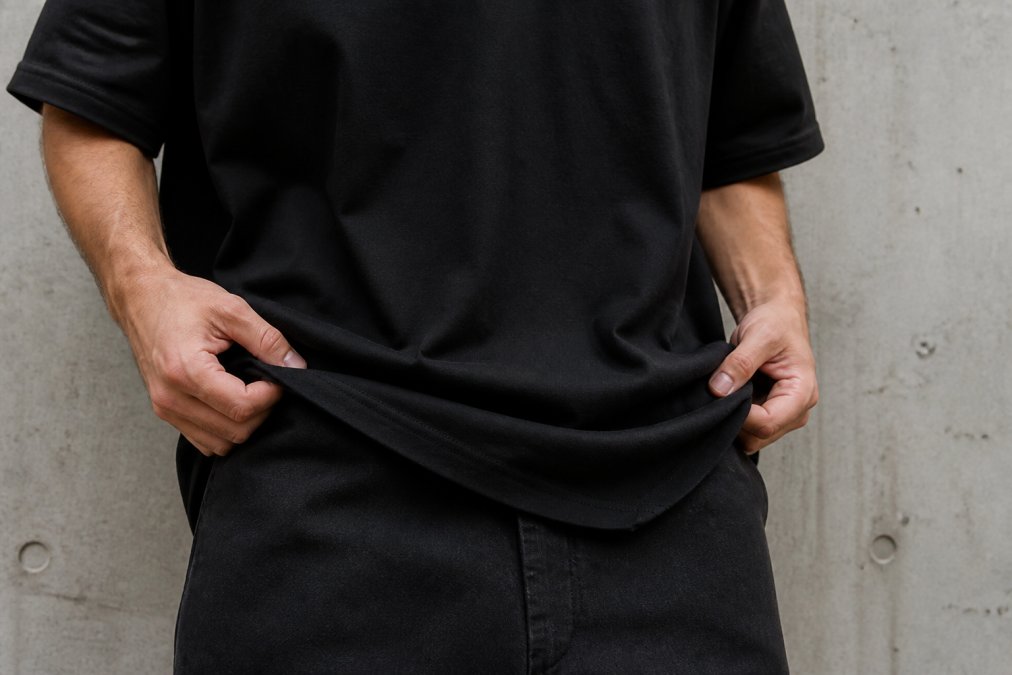
Hand-feel is the tactile part. A 150 GSM combed cotton tee feels dry and slightly papery; a heavyweight ring-spun jersey has a subtle loft, almost brushed, even when it hasn't been. That comes from yarn thickness and textile density, not factory softeners.
The heavyweight cotton t-shirt benefits that matter most are opacity, shape retention and a longer useful life. A 240 GSM tee blocks light and body outline even in white, so it works as a standalone piece.
Opacity is the one people underestimate. Hold a budget white tee up to a window and you can read through it. Heavier fabric solves that without a second layer.
Shape retention is subtler. Tensile strength in a heavier cotton yarn means the neckline and shoulder seams don't stretch out as fast, and the body doesn't twist in the wash.
The best fabric for oversized streetwear tees is heavyweight cotton jersey in the 230-280 GSM range, because an oversized cut needs fabric with enough body to hold the extra volume. Put a 150 GSM tee on an oversized pattern and you get a nightshirt. Put a 250 GSM tee on the same pattern and you get the silhouette the cut was designed for.
Fit and weight have to be chosen together. If you normally wear an XL and want an oversized look that reads deliberate rather than borrowed, sizing up once in a heavyweight cut usually gets you there, because the extra fabric weight holds the shoulder line and hem in place. Sizing up twice tends to look like a mistake.
Our Heavy Oversized Tee - Black and the same cut in Charcoal are built on this logic: heavy enough to hold the shape, cut generously through the shoulder and body. Both come in at $49.00, or two for $80.


| Weight Band | Typical GSM | Drape | Best For | Watch Out For |
|---|---|---|---|---|
| Lightweight | 140-170 | Soft, collapses to body | Layering, warm weather | Sheer in white, loses shape |
| Midweight | 180-220 | Balanced, holds a line | Everyday wear, printing | Can feel flat if knit is tight |
| Heavyweight | 230-280 | Structured, holds volume | Oversized fits, standalone wear | Slower to dry, warmer |
Most guides say fabric weight matters for printing and then stop. The useful part is the mechanism: how ink behaves on a 150 GSM blank versus a 260 GSM one, and why the same artwork can look sharp on one and muddy on the other.
Screen printing lays a cured ink layer on top of the cloth, so it needs a stable substrate. On a heavyweight cotton jersey (240 GSM and up), the fabric barely moves under the squeegee, the ink deposit stays even, and the print holds its edge through repeated washing. On a lightweight blank (140-170 GSM), the cloth shifts during the print stroke, so fine lines and small text fill in or blur. A 230-280 GSM tee comfortably takes a 305 mesh for fine detail; a 150 GSM tee usually forces you down to a 110-160 mesh and a thicker ink deposit.
DTG (direct-to-garment) bonds ink into the fibre rather than sitting on top, so it needs a tight, flat, combed cotton surface.
Industry guidance on screen printing mesh counts and ink deposits
The three habits that keep heavy cotton heavy:
Season and occasion should decide your fabric weight more than any trend cycle. A 250 GSM tee in a humid summer works if you're stationary or in air conditioning, but it's a poor choice for a long walk in the heat. A 180 GSM midweight handles that better while still holding enough shape to look intentional.
| Season | Recommended Weight | Why |
|---|---|---|
| Peak summer | 150-190 GSM | Breathability without full collapse |
| Transitional | 190-230 GSM | Layers cleanly, holds shape |
| Cooler months | 230-280 GSM | Warmth, structure, standalone wear |
Yes. At 220 GSM you are in solid midweight territory, which is where most everyday tees sit. It holds its shape better than a 150 to 180 GSM shirt, stays opaque in lighter colours and still breathes enough for warm weather. For a streetwear look that keeps some structure without feeling like a blanket, 220 GSM is a safe starting point. If you want a boxier, more architectural drape, step up to 240 GSM and above.
Most premium streetwear tees land between 220 and 260 GSM. That range gives you the thick hand-feel, opaque finish and structured drape that make an oversized fit look intentional rather than sloppy. Below 200 GSM the fabric tends to cling and lose shape; above 280 GSM it gets stiff and slow to dry. The best fabric weights for streetwear t-shirts sit in that middle band, which is why heavyweight oversized styles usually start around 240 GSM.
Weight controls how the fabric falls off your shoulders. A lightweight 150 GSM tee collapses and clings, so an oversized cut reads as baggy. A 240 GSM plus tee holds its own shape, so the extra room looks deliberate and the hem sits away from the body. Heavier cotton also creases less across the chest. If you want that clean, boxy streetwear silhouette, fabric weight matters more than the size on the label.
They can, which is why construction matters as much as GSM. Look for pre-shrunk or garment-washed cotton and a ribbed collar that keeps its shape. Wash cold, turn the tee inside out and skip the dryer; heat is what pulls cotton up and thins the fabric over time. A well-made heavyweight tee washed this way will hold its weight and length.
Your cart is currently empty.
Start Shopping