

How to Build a Minimalist Streetwear Wardrobe
Learn how to build a minimalist streetwear wardrobe with core pieces, outfit formulas and a practical shopping sequence. Start with quality basics.
Learn how to build a minimalist streetwear wardrobe with core pieces, outfit formulas and a practical shopping sequence. Start with quality basics.

Last Updated: October 5, 2026
Building a minimalist streetwear wardrobe starts with knowing what you already own. Most guys skip this step, buy more stuff, and end up with a closet full of pieces that don't work together.
So before you spend a cent, audit what's already hanging in your wardrobe. Pull everything out. Yes, everything.
Ask these questions about each piece. If you can't answer yes to at least three, it goes.
Be honest. Most guys find that 40 to 60 percent of their wardrobe fails this test. That's normal. It's also the reason your closet feels full but empty at the same time.
A men's streetwear capsule wardrobe can be built around 18 core pieces. This number can cover every season, every casual occasion, and many combinations you'll realistically need.
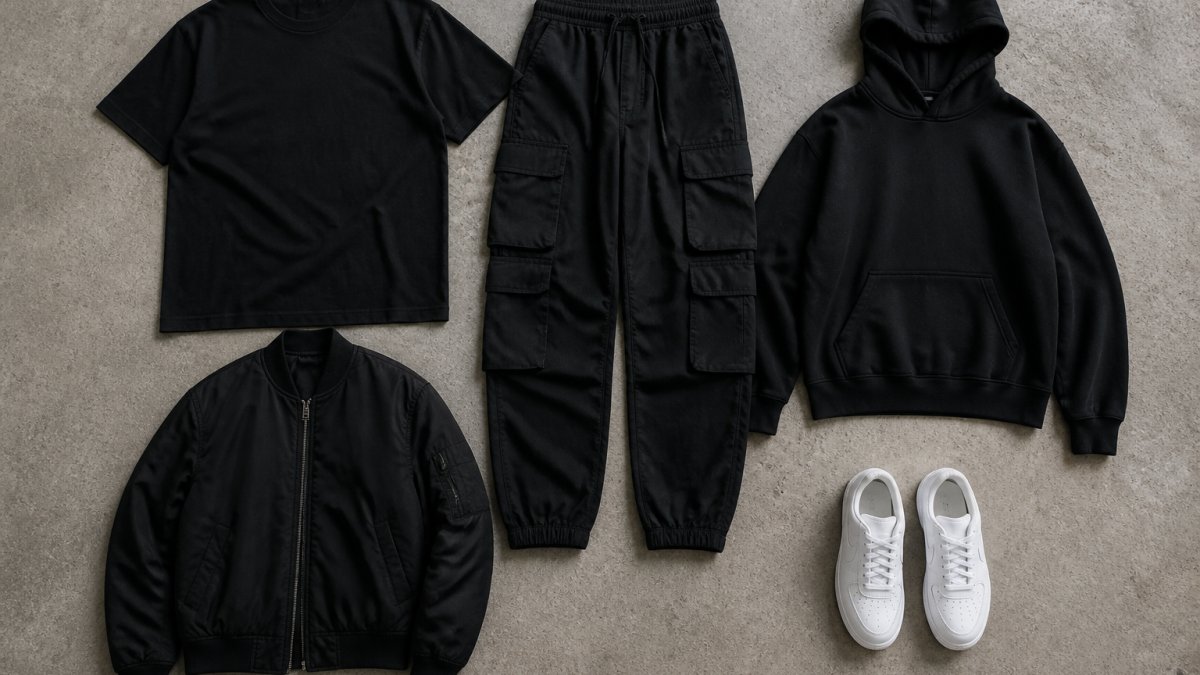
Here's the breakdown:
Tops (7 pieces)
Bottoms (4 pieces)
Outerwear (3 pieces)
Footwear and accessories (4 pieces)
Limited drops create urgency. That's their job. But a piece you buy because it's "dropping" rarely fits into a minimalist wardrobe.
Skip anything with heavy branding, loud prints, or trend-specific details. These pieces date fast and clash with everything else.
The minimalist streetwear approach aims for pieces that can be easily mixed and matched. A limited drop often features pieces that are harder to integrate into a versatile wardrobe.
A capsule wardrobe works best when you build it in stages. Rather than buying all 18 pieces at once, most guys start with a smaller rotation and expand once they know what they actually reach for.
| Tier | Piece Count | What's Included | Realistic Coverage |
|---|---|---|---|
| Starter | 6 pieces | 3 heavyweight tees, 1 pair of pants, 1 hoodie, 1 pair of sneakers | 5-7 outfits, one week of casual wear |
| Core | 12 pieces | 6 tops, 3 bottoms, 1 jacket, 2 pairs of sneakers | 15-20 outfits, full weekly rotation with layering |
| Complete | 18 pieces | The full essentials list above | Full seasonal coverage, 30+ outfit combinations |
Start at the tier that matches both your budget and how often you actually dress casually. If you wear streetwear four days a week, the Starter tier will feel thin within a month.
The general rule: spend on the pieces that touch your skin and take the heaviest wear. Save on the pieces that sit on top or get rotated less.
Spend more on:
Spend less on:
Cost-per-wear is the purchase price divided by how many times you wear the item. It's the single most useful way to judge whether a piece is worth buying.
A heavyweight tee that holds its shape through 100+ wears delivers a far lower cost-per-wear than a thin tee that loses form after 15 washes, even if the thin tee was cheaper upfront.
A common pattern among guys who build minimalist wardrobes successfully: they buy fewer pieces, pay slightly more per piece, and replace them far less often.
If you're starting from zero, buy in this order:
This sequence gets you to a wearable rotation fastest. Everything after step four is layering and refinement.
Styling oversized T-shirts comes down to balance. If your top is oversized, your bottom shouldn't be equally baggy unless you're going for a specific silhouette.
The rule: one oversized piece per outfit, maximum two if you know what you're doing.
Tall and lean: You can handle more volume. Oversized fits work well without swallowing you.

Shorter frame: Keep oversized pieces closer to your actual size. Too much fabric shortens your silhouette.
Broader build: Focus on drape, not tightness. A heavyweight cotton that holds its shape works better than thin fabric that clings.
Softer midsection: Choose tees that fall just below the waistband.
This is where a minimalist wardrobe can be highly versatile. With a curated selection of pieces, you can create numerous outfits. Every top can potentially pair with every bottom, and layering can multiply the combinations further.
Here's how the maths works in practice. Six tops × three bottoms can create 18 base combinations. Adding a jacket or overshirt over any of them can increase the outfit count.
Use this as your starting grid. Each row is a top, each column is a bottom, and the cell tells you what works.
| Baggy jeans | Straight jeans | Cargo pants | |
|---|---|---|---|
| Heavyweight tee | ✓ Clean, everyday | ✓ Safe default | ✓ Slight volume clash, keep tee fitted |
| Hoodie | ✓ Strong silhouette | ✓ Works with layers | ✓ Best with darker sneakers |
| Overshirt (open) | ✓ Layer over tee | ✓ Smart-casual lean | ✓ Utility look |
| Long-sleeve tee | ✓ Under jacket | ✓ Under bomber | ✓ Under hoodie |
| Sweatshirt | ✓ Weekend staple | ✓ Reliable | ✓ Easy rotation |
| Bomber jacket | ✓ Over tee | ✓ Over long-sleeve | ✓ Over hoodie |
These five alone cover casual coffee runs, weekend errands, low-key dinners, and most social situations that don't require a dress code.

The layering rule for minimalist streetwear: one statement piece per outfit, everything else supports it.
A capsule built for year-round wear needs to flex with the weather.
Warmer months: Drop the outerwear layer. Heavyweight tee + pants + sneakers is the whole outfit.
Cooler months: Add the bomber or heavier coat over your base. Layer a hoodie under the jacket when it's genuinely cold.
Shoulder seasons: The overshirt is your best friend. It's light enough to wear open over a tee and warm enough to close when the temperature drops.
Fabric quality decides how long your basics last. Heavier cotton holds shape, resists pilling, and keeps its colour through repeated washing.
Look for these markers of quality basics:
Care matters just as much. Wash cold, inside out, and skip the dryer. Heat is what kills cotton.
Cost-per-wear is the real number that matters. A $49 tee worn 100 times costs less per wear than a $20 tee worn 15 times before it loses shape.
Follow this sequence. It stops you from buying random pieces that don't connect.
This order matters. Base layers first, outerwear last. You'll wear the base pieces daily and layer over them.
For the starting point, our Heavy Oversized Tee - Black is built to hold its weight and shape through repeated washes. Pair it with the Wide Pleated Cargo Pants - Black for a clean base, then layer with the Organic Basic Hoody - Black when it cools down.

Building a minimalist streetwear wardrobe can be a process that benefits from thoughtful purchasing rather than buying everything at once.
Building in stages, wearing what you have, and adding only what fills a real gap can be an effective approach.
That's the approach we take at Urban Classics. Clean basics, no hype, built to last. Our heavyweight tees, cargo pants, and hoodies give you the foundation.
Shop now and build a wardrobe you'll actually wear.
Start with 18 core items: three heavyweight T-shirts in neutral tones, two hoodies or sweatshirts, one bomber or denim jacket, one overshirt, two pairs of baggy jeans or cargo pants, one pair of joggers, clean sneakers, a baseball cap, and a few layering pieces. Sticking to a neutral palette of black, grey, white, and earth tones means everything mixes together without effort. The goal is fewer pieces that all work with each other, not a packed wardrobe.
A practical capsule sits between 15 and 20 pieces. That covers roughly a week of outfits with room for layering and seasonal swaps. The exact number matters less than the ratio: aim for pieces you can wear at least three ways. If an item only works in one outfit, it probably doesn't earn its place. Rotate seasonal items like heavier jackets in and lighter pieces out rather than buying more.
The 3-3-3 rule suggests building outfits from three tops, three bottoms, and three pairs of shoes, which gives you 27 combinations from just nine items. It is a useful starting framework when you are rebuilding after a wardrobe audit. Once those combinations feel natural, expand gradually with layering pieces like overshirts or a bomber jacket. The rule works because it forces every piece to coordinate with the others.
Pick one base colour (usually black or navy), two neutrals (grey and white), and one accent (earth tones like olive or sand). This palette lets you mix any top with any bottom without clashing. Neutral colours also hide wear better and stay in style longer than trend-driven shades. If you want to test a new colour, do it with a T-shirt first before committing to a jacket or pants.
Your cart is currently empty.
Start Shopping