

How to Layer Oversized Clothing for Men: 2026 Guide
Learn how to layer oversized clothing for men with this practical guide covering proportions, fabric weight, tucking and streetwear layering tips.
Learn how to layer oversized clothing for men with this practical guide covering proportions, fabric weight, tucking and streetwear layering tips.

Last Updated: October 3, 2026
Learning how to layer oversized clothing for men comes down to one idea: control the volume. Oversized pieces only look sharp when you decide where the bulk sits and where the body shows through.
Most guys get this wrong. They size up across the board and end up swallowed by fabric. The fix is simple once you know the rules.
The 3-3-3 rule is a styling method that limits how much volume you wear at once. Keep to three colours, three fabric weights and three visible layers maximum. It works because the eye reads proportion before it reads detail.
Break the rule and you look like a pile of clothes. Follow it and the outfit reads intentional.
Here is how it plays out:
That is the whole framework. Simple, but it decides everything that follows.
Proportion is the relationship between the width of your top half and your bottom half. Get it right and oversized clothing looks deliberate. Get it wrong and it looks like a mistake.
The rule is straightforward: if the top is wide, the bottom needs shape.
Tapered bottoms narrow toward the ankle. They give your legs a clear line under a loose top. High-waisted fits sit at your natural waist, which lifts the hemline and makes legs look longer.
Pair them like this:
A common mistake is wearing wide on top and wide on the bottom. That erases your shape completely.
Fabric weight decides how a layer sits, drapes and stacks. It is measured in grams per square metre (GSM), and it matters more than colour or brand.
Light fabrics under 200 GSM cling and show every fold. Heavy fabrics above 300 GSM hold their shape and drape cleanly. For layering, you want a mix.
| Layer | Fabric Weight | Job |
|---|---|---|
| Base layer | 150-200 GSM | Sits close, manages sweat |
| Mid-layer | 250-300 GSM | Adds warmth and body |
| Outerwear | 350 GSM+ | Holds the outer silhouette |
A heavy base layer under a heavy mid-layer creates bulk with nowhere to go. Keep each layer doing one job.
This is where most guides stop, and it is where outfits fall apart. Fabric weight alone tells you half the story. The other half is friction and drape.
When two heavy fabrics sit on top of each other, they grip.
A common pattern that works:
The smooth base lets the mid-layer move. The textured mid-layer gives the heavy outer something to sit on without slipping.
Texture is the second variable. Smooth cotton under a ribbed knit under a brushed fleece gives the eye something to follow. Three smooth layers look flat, no matter how good the individual pieces are.
Think in terms of contrast pairs:
Denim and wool are the most common heavy fabrics in a layering wardrobe, and both are difficult.
Denim has almost no give. A denim jacket over a heavy hoody will feel tight across the shoulders even if the jacket fits well on its own.
Wool has give but grabs. A wool overshirt over a smooth cotton tee slides fine. A wool overshirt over a brushed fleece will pill the fleece and stick.
Get the weights and the textures right and the outfit holds its shape all day. Get them wrong and no amount of styling fixes it.
An oversized tee looks sloppy when it is too long, too wide, or both. The fix is almost always in the hemline and the shoulder seam.
Your shoulder seam should sit just past your natural shoulder. Any further and the sleeve swallows your arm. Your hem should land around mid-fly, not below it.
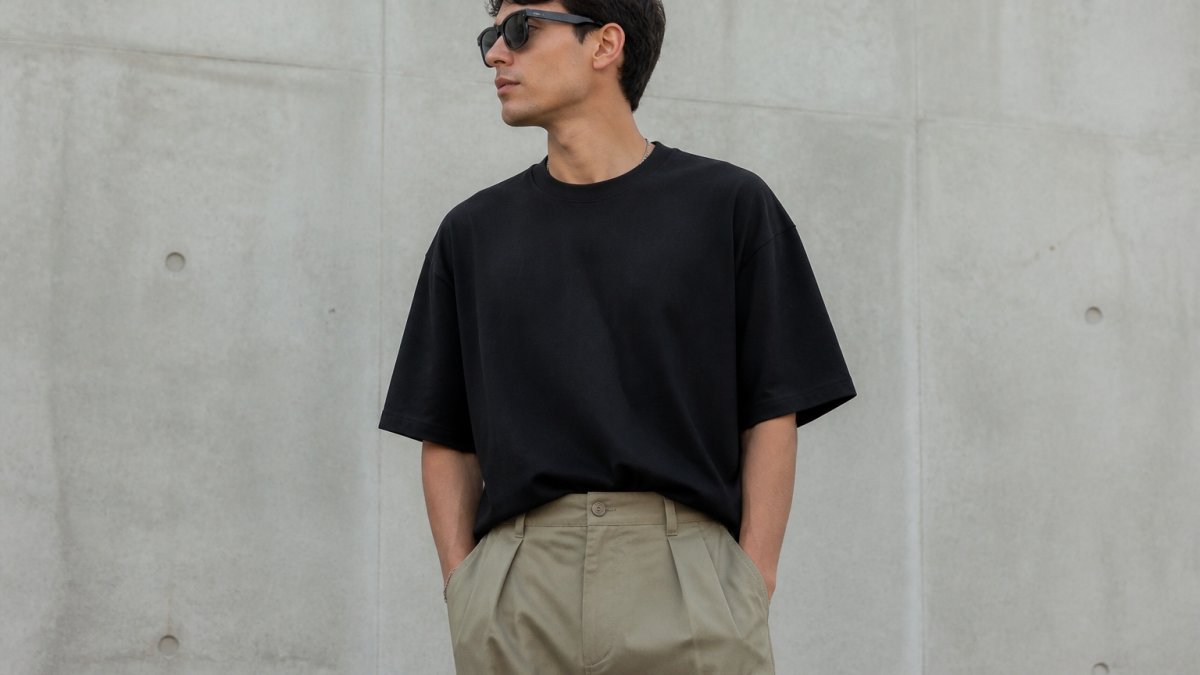
A full tuck kills the oversized look. A front tuck keeps it.
Try these:
Heavyweight tees hold a front tuck better than thin ones. Thin fabric slips out within minutes.
Texture and colour do the work that volume cannot.

Stick to neutral tones for your base and mid-layer. Black, grey, stone and off-white mix without effort.
Accessories should sit at the edges of the silhouette:
Metal and leather add texture that fabric alone cannot. Keep it to two pieces maximum.
For footwear, match the weight of your pants. Wide cargos need a substantial shoe. Slim tapered pants suit a lower-profile sneaker.
Shrinkage comes from heat and agitation. Cotton fibres relax and tighten when washed hot, and a dryer makes it worse.
Wash cold, every time. Turn garments inside out. Skip the dryer and dry flat in shade.
Heavyweight cotton shrinks less than thin cotton because the yarn is denser. That is one reason we build our basics from heavier fabric. It holds its fit after repeated washes, which matters when every layer depends on the one beneath it.
Oversized clothing can work in most settings if you adjust the volume. The trick is to dial it down rather than abandon it. The same principles apply whether you are dressing for a desk, a warm afternoon or a cold evening, only the layer count and the fabric weights change.
Most oversized styling content is streetwear-focused.
The rule for work is simple: keep one oversized element and keep everything else clean. Two oversized pieces read casual. One reads intentional.
What works:
What does not work:
Fabric choice matters more here than in streetwear. A structured wool-blend blazer holds its shape and reads sharp even when it is cut loose.
Colour should stay tight. Two neutrals and one accent maximum. Charcoal, navy, stone and off-white mix without effort.
Go light. A single oversized tee in a breathable cotton, paired with tapered shorts. No mid-layer.
On a warm day, the goal is airflow, not insulation. Loose layers trap air, which insulates you. That is useful in the cold and a problem in the heat.
Pick fabrics that move air: open-weave cotton, linen blends, lightweight jersey. Avoid heavy brushed fleece and dense knits, which hold heat against the body.
Add a mid-layer and outerwear. A heavy tee, a hoody and an open jacket gives you three weights that stack cleanly.
The key is to build in order of weight, lightest against the skin and heaviest on the outside.
A stack that works on a cool evening:
Wearing the outer layer open does two things.
Temperature regulation is the part most guides skip. Loose layers trap air, which insulates you.
The challenge with oversized clothing is that more fabric does not mean more style. It means more decisions. Every layer needs a reason to be there.
That is how we approach our range at Urban Classics. Our Heavy Oversized Tee gives you a heavyweight base that holds its shape, and our Organic Basic Hoody works as a mid-layer or outer piece. Pair either with our Wide Pleated Cargo Pants for tapered shape under a loose top.


Start with one heavy base layer and build from there. Get the proportions right and the rest follows.
The 3-3-3 rule keeps an outfit to three colours, three distinct pieces and no more than three focal points. Applied to layering oversized clothing, it means a black tee, black hoody and black cargo pant form one palette, so the eye reads proportion and texture instead of competing patterns. Fewer variables make visual balance easier to control, and it stops a relaxed fit from tipping into messy.
Anchor the volume. Wear one oversized piece at a time, pair it with a tapered or fitted bottom, and keep hemlines intentional rather than stacked at random. A structured outerwear piece over a relaxed base layer sharpens the silhouette. Fabric weight matters too: heavy cotton holds its drape, while thin jersey collapses and reads as baggy rather than oversized. Check the mirror from the side, not just the front.
Yes, if the jacket is cut with enough room in the shoulders and chest. Use a mid-weight hoody as a mid-layer and choose an outerwear piece one size up so the sleeves do not bunch. Keep the hood down under a collared jacket, or let it sit over the collar for a streetwear look. Heavy fleece under a tight jacket restricts movement and flattens the drape.
Wash cold, turn the garment inside out, and skip the dryer. Heat and agitation are what shrink cotton, so a cold gentle cycle followed by line drying in shade keeps the fit close to what you bought. If you must machine dry, use the lowest heat setting and remove the item while slightly damp. Following the care label on any heavy oversized tee protects both the weight and the shape.
Your cart is currently empty.
Start Shopping