

How to Prevent Clothes from Shrinking: 2026 Guide
Learn how to prevent clothes from shrinking with fabric-specific tips, wash cycles, and drying methods. Keep your streetwear fitting perfectly —.
Learn how to prevent clothes from shrinking with fabric-specific tips, wash cycles, and drying methods. Keep your streetwear fitting perfectly —.

Last Updated: August 20, 2026
Clothes shrink because of physics, not bad luck. Understanding how to prevent clothes from shrinking is the difference between a wardrobe that lasts years and one that gets replaced every season. At Urban Classics, we've built our range around heavy-weight cotton basics precisely because we know how much fabric quality and care knowledge matter to longevity. This guide covers the science behind shrinkage, fabric-specific thresholds, and the exact steps to keep your garments fitting the way they should, wash after wash.
Shrinkage is a fibre-level event. When natural fibres like cotton and wool are spun into yarn, tension is applied throughout the process. Heat and moisture release that tension, allowing fibres to contract back toward their natural, relaxed state. This is called fibre relaxation, and it's essentially irreversible once it occurs. Mechanical agitation compounds the problem, the tumbling action inside a washing machine physically compresses fibres together, causing the fabric to pull in.
Natural fibres, including cotton, wool, linen, and rayon, are far more susceptible to shrinkage than synthetic blends. Natural fibres absorb moisture readily, which swells the individual strands and makes them vulnerable to heat-driven contraction. Wool is particularly sensitive because its outer scales can lock together permanently when exposed to heat, a process called felting.
Synthetic fibres like polyester and nylon resist moisture absorption and hold their shape more reliably. Cotton-polyester blends land somewhere in the middle. A 60/40 cotton-poly blend will shrink less than pure cotton but more than 100% polyester.
| Fabric | Max Safe Wash Temp | Shrinkage Risk | Dryer Safe? |
|---|---|---|---|
| 100% Cotton | 30°C | High | Low heat only |
| Wool | Cold/hand wash | Very high | No |
| Rayon | Cold only | Very high | No |
| Linen | 30-40°C | Moderate | Low heat only |
| Polyester | 40°C | Low | Medium heat |
| Cotton-Poly Blend | 30-40°C | Low-moderate | Low heat |
Rayon deserves special attention. It's one of the most shrink-prone fabrics available, capable of shrinking significantly in a single warm wash. Always cold wash rayon, and air dry it flat.
Fabric care labels are the most reliable source of information about how to treat a garment. According to CHOICE Australia's guide to laundry symbols, most Australian consumers don't know what the majority of care symbols mean, which directly leads to accidental damage.
Here's a quick reference for the symbols that matter most for shrinkage prevention:
A common mistake is assuming that "delicate" on a washing machine is the same as "hand wash." The delicate cycle still applies mechanical agitation. For truly delicate garments, hand washing in cool water is the only safe option.
Cotton is the most popular fabric in everyday wardrobes and one of the most commonly shrunk. The good news: with the right approach, pure cotton garments can hold their size through dozens of washes.
The single biggest lever is temperature. Hot water causes cotton fibres to contract rapidly. Cold water allows fibres to stay relaxed. Wash cotton t-shirts in cold water (below 30°C) every time, and you'll eliminate the most significant shrinkage risk immediately.
The gentle cycle is your default setting for cotton basics. It reduces spin speed and limits agitation duration, both of which reduce fibre stress. A few practical rules:
Sorting laundry by fabric type ensures each group runs on its own appropriate cycle. Heavy items like denim need more agitation to clean properly; lightweight items need less. Sort into at least three categories: delicates and lightweight knits, everyday cotton and blends, and heavy items.
Tumble drying shrinks clothes primarily through thermal stress combined with mechanical tumbling. According to Australian Consumer Law guidance on product care and labelling, garments must be labelled with accurate care instructions, which means a "tumble dry low" label is a genuine guide.
Air drying is the safest option for preventing shrinkage. Hanging garments on a drying rack or line allows moisture to evaporate gradually without heat or agitation. Tumble drying on a low heat setting is acceptable for most cotton-polyester blends and pre-shrunk fabrics, but remove garments while still slightly damp to prevent over-drying.
For wool and rayon: never tumble dry. The combination of heat and mechanical agitation will cause irreversible shrinkage or felting in a single cycle.
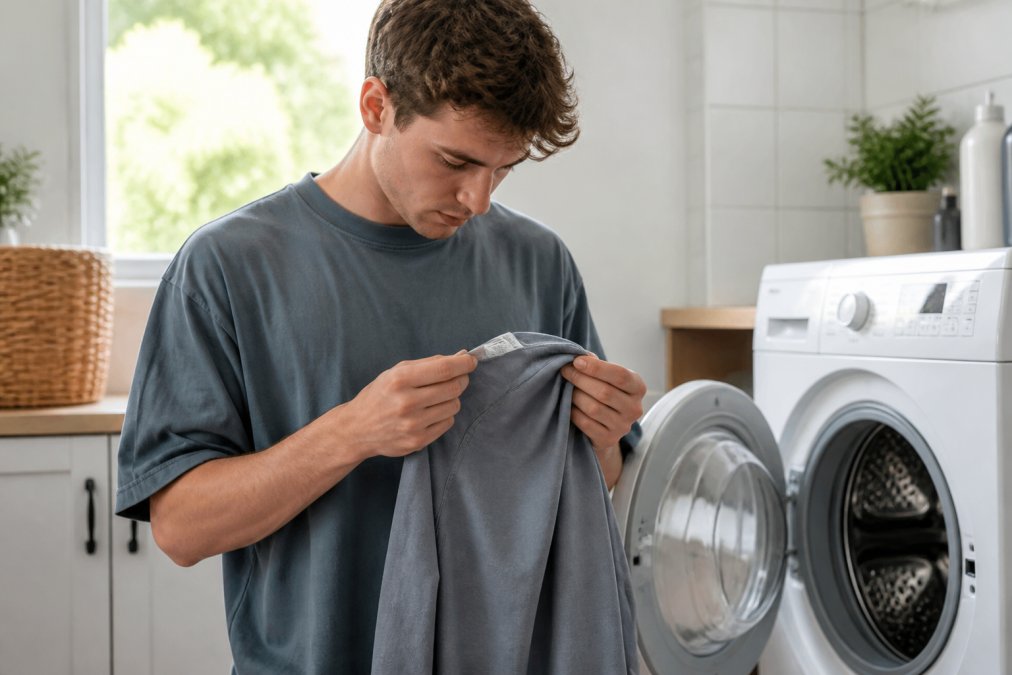
Water hardness and laundry detergent choice both influence how fibres behave under wash conditions. Hard water contains elevated levels of calcium and magnesium minerals that can bind to fabric fibres, making them stiffer and more brittle. If you're in a hard water area, using a water softener additive or hard-water detergent can reduce long-term fibre degradation.
As noted in Water Research Australia's overview of water quality and household use, water hardness varies significantly across different regions, which means the same wash routine can produce different results depending on where you live.
Detergent concentration matters too. Using too much detergent creates excess suds that are harder to rinse out. Residual detergent left in fibres can cause stiffness and contribute to fibre breakdown over repeated washes. Use the recommended dose, or slightly less for small loads.
A garment that's already shrunk isn't necessarily ruined. Gentle moisture and careful stretching can encourage fibres to relax and extend again. This technique works best on cotton and cotton blends. Rayon is the hardest to recover, as its fibres are more fragile.
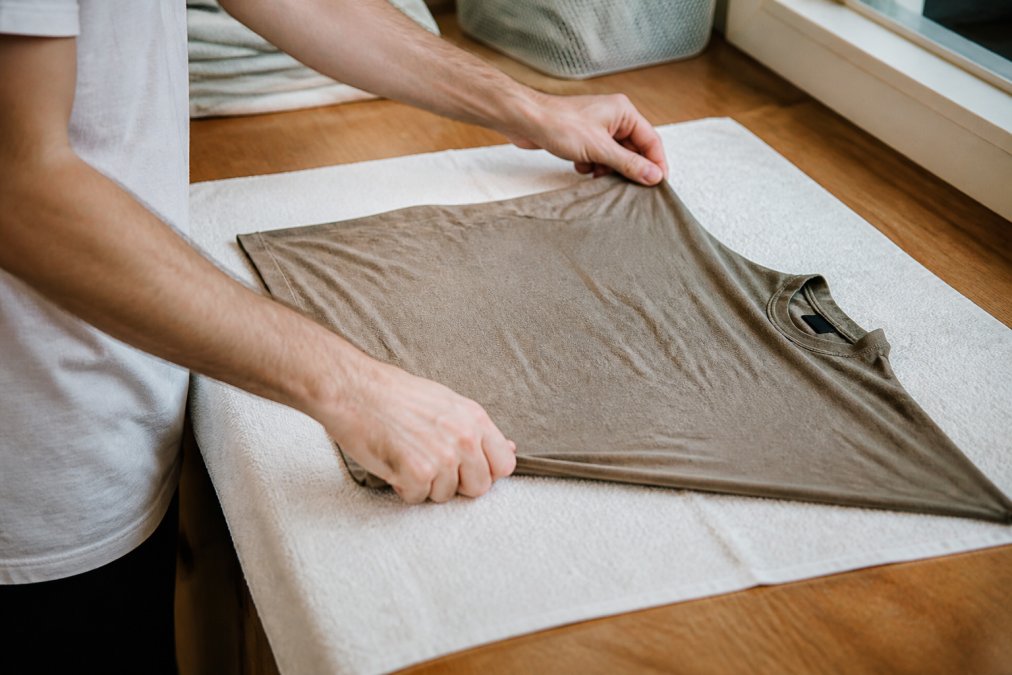
How to unshrink a cotton garment:
For cotton basics, you can often recover 80-90% of the lost size. For heavily shrunk wool, professional wet finishing by a dry cleaner is a better option.
To prevent clothes from shrinking further after recovery, immediately adjust your care routine. Whatever caused the original shrinkage must be corrected before the next wash.
Shrinkage is one of the most preventable forms of garment damage, but it requires consistent habits. Cold washes, low spin speeds, air drying, and reading care labels are the foundation. For anyone investing in quality basics that are meant to last, those habits are non-negotiable. Urban Classics heavy-weight cotton tees are built to hold up, but even the best fabric needs the right care to stay looking right. Check the care label, wash cold, skip the dryer when you can, and your basics will stay fitting the way they should. Shop now and get free shipping on orders over $50.
Cold water significantly reduces shrinkage because it does not trigger the thermal stress that causes natural fibres to contract. Cotton, wool, and rayon are most vulnerable to heat, so washing at 30°C or below keeps fibres relaxed. Cold water alone does not eliminate all shrinkage risk, mechanical agitation and high spin speeds also play a role, but it is the single most effective setting change you can make to prevent clothes from shrinking in the wash.
Not always. Cotton fibres contract when exposed to heat and moisture, but the process can be partially reversed. Soaking the garment in lukewarm water with a small amount of hair conditioner or fabric softener relaxes the fibres, then gently stretching the item back to its original dimensions while damp can recover some of the lost size. Severe shrinkage, more than 5-10% reduction, is harder to fully reverse, and repeated heat exposure makes the change increasingly permanent.
Natural fibres like cotton, wool, and rayon have a coiled or crimped structure that tightens under heat and moisture, causing noticeable shrinkage. Synthetic blends such as polyester and nylon are heat-set during manufacturing, so their fibres hold their shape better. Pre-shrunk fabrics have already been treated to reduce this effect, but they can still shrink slightly if exposed to temperatures higher than the care label recommends. The tighter the original weave, the less room fibres have to contract further.
Fill a basin with lukewarm water and add a tablespoon of hair conditioner or gentle fabric softener. Submerge the garment for 20-30 minutes to relax the fibres. Remove it without wringing, then lay it flat on a clean towel and gently stretch it back toward its original shape. Pin the edges if needed and allow it to air dry flat. This works best on cotton and wool. Avoid repeating the process more than once or twice, as over-stretching can distort the garment's structure.
This article was written using GrandRanker
Your cart is currently empty.
Start Shopping