

How to Read Laundry Care Labels Correctly: 2026 Guide
Learn how to read laundry care labels correctly with our 2026 guide. Decode wash, dry, iron and bleach symbols to keep your clothes looking better.
Learn how to read laundry care labels correctly with our 2026 guide. Decode wash, dry, iron and bleach symbols to keep your clothes looking better.

Last Updated: September 18, 2026
Most people cut the tag out because it scratches. That small piece of fabric is the difference between a tee that lasts three years and one that turns into a crop top after two washes. Reading laundry care labels correctly is the most effective way to protect your wardrobe.
Every laundry care label is built from five symbol families, and once you recognise the shape, you can decode almost any tag. The system follows international standards, so a shirt bought overseas uses the same icons as one bought locally.
| Symbol Shape | Category | What It Tells You |
|---|---|---|
| Wash tub | Washing | Water temperature, cycle type, hand wash or machine |
| Triangle | Bleaching | Whether bleach is safe, and which type |
| Square | Drying | Tumble dry heat, line dry, drip dry |
| Iron | Ironing | Maximum heat, shown by dots |
| Circle | Dry cleaning | Professional cleaning instructions |
The wash tub icon is the first symbol on almost every care label and controls water temperature and cycle. A number inside shows the maximum temperature in Celsius; a bar underneath signals a gentler cycle, one bar permanent press, two bars delicate with reduced spin.
The bleach triangle is straightforward: empty means any bleach is safe, two diagonal lines inside means oxygen-based bleach only, and a cross means do not bleach. Chlorine bleach strips colour and weakens fibres, so most cotton streetwear carries the "oxygen only" or "do not bleach" marking.
The care label is usually sewn into an inside seam. On most tees and tops it sits at the left side seam near the hem; on pants and joggers, check the inside waistband; on swimwear, look along the inner side seam or back lining.
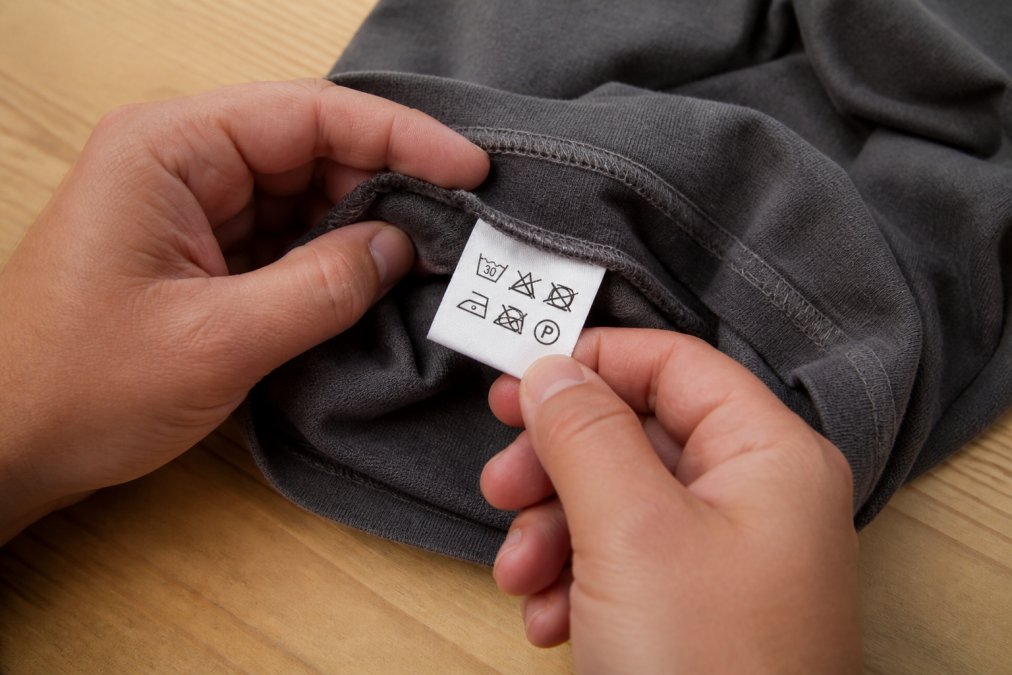
Shrinkage happens when heat and agitation make cotton fibres contract, and the care label is your early warning system. Wash at 60°C when the tag says 30°C, or tumble dry on high heat when it says line dry, and shrinkage follows.
Swimwear deserves its own mention. Chlorine and salt break down elastane, so rinse in cold fresh water immediately after wearing, hand wash with mild detergent, and never tumble dry. That keeps seams from fraying and the fit from going slack.
A faded or missing care label is common on older garments, fast-fashion pieces and second-hand buys. It does not mean guessing, it means reading what is left of the tag, assessing the fabric and construction, then applying the gentlest routine that still gets the garment clean.
Even a worn tag gives up something useful. Hold it to a bright light and look for shape outlines rather than detail: a tub means washable, a triangle gives bleach guidance, a square gives drying. Even without dots or numbers, the shape narrows your options considerably.
Pure fibres are straightforward. Blends are where people get caught out, because a blend behaves like its most delicate component. A 95% cotton / 5% elastane tee is not a cotton tee for care purposes; that 5% fails first under heat.
| Fibre or blend | Wash temperature | Drying | Ironing | Watch out for |
|---|---|---|---|---|
| Cotton (pure) | Cold to 40°C | Line dry or tumble low | Medium to high | Shrinkage on first wash if not pre-shrunk |
| Cotton / elastane | Cold, 30°C max | Line dry | Low | Elastane degrades with heat and chlorine |
| Linen | Cold to 40°C | Line dry | High while damp | Creasing; press before fully dry |
| Wool | Cold, hand wash or wool cycle | Dry flat | Low, with a cloth | Felting from agitation and temperature shock |
| Silk | Cold, hand wash | Dry flat away from sun | Low, inside out | Water spotting; colour bleed |
| Polyester | Cold to 40°C | Tumble low or line dry | Low | Holds odour; wash inside out |
| Nylon | Cold to 40°C | Line dry | Low | Yellowing from heat and sunlight |
| Viscose / rayon | Cold, hand wash | Dry flat | Low | Weak when wet; stretches if hung |
| Acrylic | Cold, gentle | Dry flat | Low or none | Pilling; stretches with heat |
Two garments can share identical fibre content and need completely different care. Structure is the variable most guides ignore.
Before committing an unlabelled garment to a full wash, test it. Dampen a hidden spot, inside a hem, pocket or cuff, press a white cloth against it for thirty seconds, and check for colour transfer. If it bleeds, wash separately in cold water for the first few cycles, or hand wash.
If you are still unsure, this routine damages the fewest garments:
The core symbol shapes are standardised across most major markets, so a triangle always means bleach and a circle always means professional cleaning. Where labels differ is in the detail:
Most eco laundry advice says wash cold and run full loads. That skips the obvious point: your care label already tells you the lowest temperature and gentlest cycle the garment will tolerate. Reading it properly is the most effective sustainability habit available, because it stops you over-washing and over-heating clothes that do not need it.
The temperature number inside the wash tub is a ceiling, not a target. If a label says 40°C, washing at 30°C is almost always fine for lightly soiled garments and uses less energy. The gap between a hot and a cold wash is the largest single lever you have over your machine's energy draw, and most people ignore it.
One bar under the tub means a gentler cycle than a plain tub; two bars means delicate with reduced spin. Running a delicate garment on a normal cycle risks damage and uses more water and agitation than it needs. Matching the cycle to the label is both a care and an efficiency decision.
Most garments do not need washing after every wear. Air them, spot clean marks as they appear, and reserve full washes for when they are actually soiled. This is the highest-impact habit in textile maintenance, cutting the cycles a garment goes through and the energy, water and detergent consumed per year of wear.
A practical routine:
Using more detergent than the bottle recommends does not get clothes cleaner. It leaves residue that traps odour and dulls colour, and puts more surfactant into the wastewater. For most loads the recommended dose is correct, and lightly soiled loads often need less.
A full load uses roughly the same energy and water as a half load, so running full loads is straightforward efficiency. But overloading is a false economy: it reduces agitation, so clothes come out less clean and often need a second wash. Load the drum so items move freely, and sort by colour and fabric weight.
Synthetic fabrics shed microfibres during washing, and shedding increases with agitation and heat. Wash synthetics on a gentler cycle, at lower temperature, and less often; a wash bag or microfibre filter helps further. Fabric choice and care are linked: a durable heavy-weight fabric that holds up over years of washing will outlast a thin synthetic that pills after a season.
A loose seam, a missing button or a small hole is not a reason to retire a garment. Basic repairs extend wear life significantly, and wear life is the dominant factor in a garment's environmental footprint. The care label tells you how to wash it; repairing it keeps it out of landfill.
The most sustainable garment is the one you keep wearing. That is why we build our range around heavy-weight cotton and durable construction: fabric that holds its shape through repeated washing, with care instructions that tell you how to keep it that way.
Australian garments follow a standard set of five symbol categories: a wash tub for washing, a triangle for bleaching, a square for drying, an iron for heat settings and a circle for professional cleaning. Numbers inside the wash tub show the maximum water temperature in degrees Celsius, while dots inside the iron indicate heat level. Once you learn these five groups, you can read almost any laundry care label correctly.
The number 40 inside a wash tub means the garment should be washed at a maximum water temperature of 40 degrees Celsius. This is a warm wash suitable for most cotton basics and everyday wear. A bar underneath the tub signals a permanent press or gentle cycle, and a hand inside the tub means hand wash only. Always treat the number as a ceiling, not a target.
A square with a circle inside means tumble dry is allowed. One dot inside the circle signals low heat, two dots medium heat and three dots high heat. A cross through the symbol means do not tumble dry, so line dry or drip dry instead. For heavy cotton and oversized tees, low heat or air drying protects the fabric composition and helps prevent shrinkage over time.
A circle symbol means professional cleaning is recommended. A letter inside the circle, such as P or F, tells the dry cleaner which solvent to use, while a cross through the circle means do not dry clean. If the circle is absent and the label shows a wash tub with a low temperature and a hand symbol, hand washing may be a suitable alternative. When in doubt, follow the circle.
Reading a care label takes ten seconds and can add years to a garment's life, but the real challenge is building the habit of checking before every wash rather than after something shrinks. Urban Classics makes heavy oversized tees, cargo pants and swimwear built for repeat wear, with care labels that tell you exactly how to keep the fit and fabric intact. Browse the collection, check the fit guides, and get basics that hold up wash after wash.
Your cart is currently empty.
Start Shopping