

Is Heavy Cotton Cargo Pants Worth It? A 2026 Review
Is heavy cotton cargo worth it? We break down durability, weight and styling to help you decide if these rugged pants deserve a spot in your rotation.
Is heavy cotton cargo worth it? We break down durability, weight and styling to help you decide if these rugged pants deserve a spot in your rotation.

Last Updated: September 26, 2026
Heavy cotton cargo pants are made from densely woven cotton fabrics, typically cotton duck or twill, that weigh substantially more per square metre than standard casual pants. That weight is the whole point: it resists abrasion, holds its shape through repeated washing, and develops character rather than falling apart.

So is heavy cotton cargo pants worth it? For most people who wear their pants hard, yes. This guide breaks down fabric weight, durability, breathability and styling so you can decide with facts rather than marketing.
Here's the tension most buyers miss. Heavy cotton is not automatically better. A 400 GSM pant that fits badly is worse than a 280 GSM pant that fits perfectly. Weight matters, but only after fit and construction.
Below, we'll cover what to look for, where heavy cotton fails, and which pairs are actually worth your money.
Synthetic blends win on stretch and dry time. Heavy cotton wins on abrasion resistance and repairability.
Cotton duck and twill have a tight, dense weave that resists surface wear. When a cotton pant snags, you can patch it. When a synthetic blend tears, the repair often fails because the surrounding fabric keeps pulling.
That said, synthetics have real advantages:
The trade-off is honest. If you want one pair that survives years of daily wear, heavy cotton is the better bet. If you want lightweight performance gear, a blend makes more sense.
GSM, or grams per square metre, is the clearest number to compare pants by. It tells you how much fabric mass sits in every square metre, which directly affects warmth, drape and how long the pant lasts.
As a rough guide:
Higher GSM usually means better tear resistance and shape retention. It also means a longer break-in period and more warmth, which matters in a hot climate.
Durability comes down to three things: fabric weight, stitching quality and how the stress points are built. Get those right and a pair will outlast two cheaper ones.
Start with the seams. Reinforced stitching at the crotch, belt loops and pocket corners is where cheap pants fail first. Look for double-stitched or bar-tacked joins at these points.
Then check the pockets. Utility pockets should be anchored into a seam, not just stitched onto the surface. Surface-mounted pockets tear away under load.
Finally, look at the knees. Articulated knees add fabric panels that let you bend without straining the weave. That single detail extends the life of a pant more than almost anything else.
Abrasion resistance is about how the fabric handles friction over time. Cotton duck handles it well because the weave is dense and the fibres are packed tight.
Long-term degradation is where the real story sits, and it's the angle most reviews skip. Heavy cotton doesn't fail suddenly. It fades, softens and thins gradually, usually at the seat, knees and pocket edges. You'll see the wear coming months in advance, which gives you time to repair rather than replace.
Cuffed Cargo Jogging Pants - Black →
Synthetic blends often behave differently. They hold colour longer, then fail fast once the fibre structure breaks down. There's no gradual warning.
Weight-to-utility ratio is the other factor worth weighing. A 380 GSM pant that's too warm to wear half the year has a poor ratio, no matter how tough it is. The best pair is the heaviest one you'll actually wear often.
A simple way to assess this: divide the GSM by the number of months per year you can comfortably wear the pant in your climate.
Styling cargo pants comes down to one rule: balance the volume. Cargo pants are inherently bulky, so the rest of the outfit should be clean and simple.
Heavy cotton breathes better than most people expect, but it still runs warmer than a synthetic blend. In a hot, humid climate, that warmth is the main limitation.
Shrinkage is the other concern. Unwashed cotton can shrink noticeably on the first hot wash, mostly in length. Two habits prevent it:
A common mistake is buying one weight for all seasons. Heavy cotton works best when you match it to the climate and activity:
Heavy cotton is inherently repairable, and that's a big part of its long-term value. When a synthetic blend tears, the repair often fails because the surrounding fabric keeps pulling. Heavy cotton holds a patch.
Basic repairs you can do at home:
The best heavy cotton cargo pants balance fabric density, reinforced construction and a fit you'll actually wear. Urban Classics builds its cargo range around exactly that: clean basics, no logos, no hype.
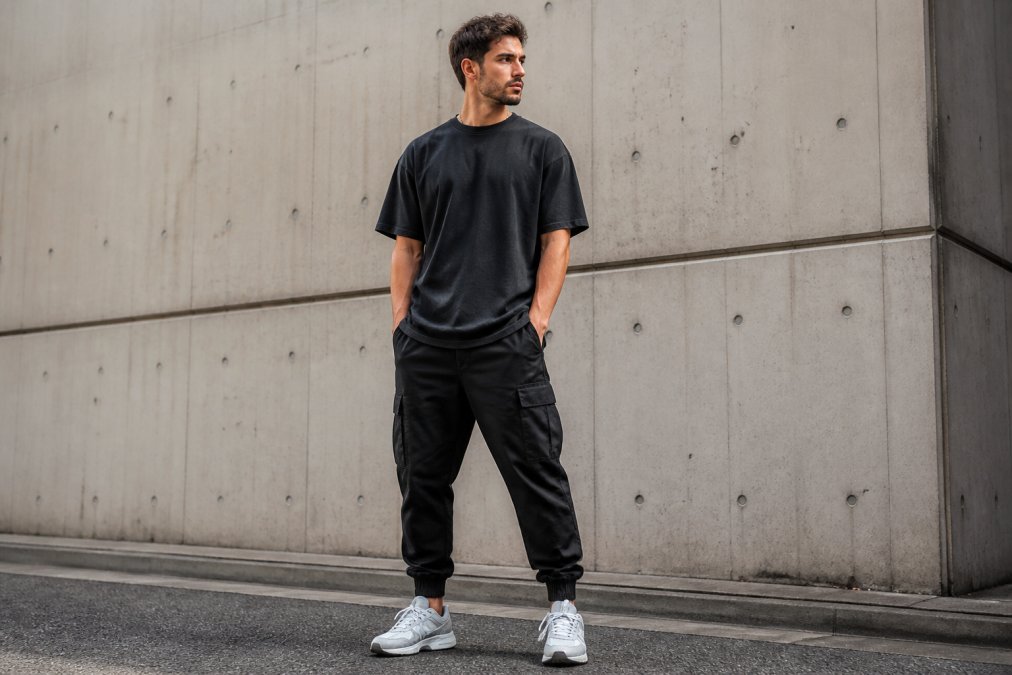
Here's how the range breaks down by use case:
| Style | Best For | Fit | Standout Detail |
|---|---|---|---|
| Cuffed Cargo Jogging Pants - Black | Everyday wear, travel | Cuffed, tapered | Clean all-black finish |
| Cuffed Camo Cargo Jogging Pants - Olive Camo | Streetwear looks | Cuffed, tapered | Camo print that stays wearable |
| Straight Leg Cargo Pants - Black | Smart-casual, work | Straight leg | Versatile, easy to dress up |
| Wide Pleated Cargo Pants - Black | Statement fits | Wide, pleated | Structured drape |
| Wide Pleated Cargo Pants - Light Olive | Warm-weather styling | Wide, pleated | Lighter colour for summer |
Heavyweight cotton, particularly cotton duck or twill, is the best material for cargo pants if you want durability and structure. These fabrics resist abrasion and hold their shape through repeated washing. Cotton-polyester blends dry faster and cost less, but they pill and thin out sooner. For streetwear silhouettes that need to stay crisp, 100% heavyweight cotton is the stronger long-term choice.

In most Australian climates, yes. Heavy cotton breathes better than synthetic alternatives, so it regulates temperature rather than trapping heat. In peak summer you may prefer a lighter cotton or a loose weave, but for three seasons a heavyweight pair works well. Look for breathability and moisture management features if you run hot, and size up slightly for airflow through the legs.
Some shrinkage is normal with any cotton garment, usually around 2-5% on the first wash if the fabric isn't pre-shrunk. Heavyweight cotton shrinks less than thin cotton because the denser weave holds its structure. Wash cold, turn them inside out, and air dry where possible. Avoid hot water and high heat in the dryer, which accelerate shrinkage and break down the fibres faster.
Wash them inside out in cold water with a gentle detergent, and skip fabric softener because it coats the fibres and reduces breathability. Air dry in shade to prevent fading, and reshape the waistband and cuffs while damp. Iron on medium heat if needed. Rotating two or three pairs rather than wearing one daily gives the fabric time to recover and extends the life of the garment.
Heavy cotton holds a silhouette. The extra weight gives cargo pants that structured, slightly stiff drape that defines streetwear fits, rather than the limp look thinner fabrics develop after a few washes. It also takes dye deeply, so blacks stay black longer. The trade-off is a short break-in period and a higher upfront cost, but the shape and colour retention make it worth it for daily wear.
Your cart is currently empty.
Start Shopping