

Long Lasting Basics for Men: The Quality Guide
Long lasting basics for men start with fabric weight, construction, and care. Learn how to build a capsule wardrobe that holds up. Shop now.
Long lasting basics for men start with fabric weight, construction, and care. Learn how to build a capsule wardrobe that holds up. Shop now.

Last Updated: August 19, 2026
Most guides on long lasting basics for men focus entirely on what to buy. This one focuses on why most basics fail, and how to tell the difference before you spend a cent. At Urban Classics, we've built our entire range around heavy-weight construction and no-logo simplicity, so we know exactly what separates a tee that holds up after 80 washes from one that goes thin after eight.
The honest truth: fabric weight and seam construction decide longevity more than any brand name or price tag. Below, we'll show you how to read those signals, which seven pieces form a genuine capsule wardrobe, and how to care for heavy cotton so it stays heavy.
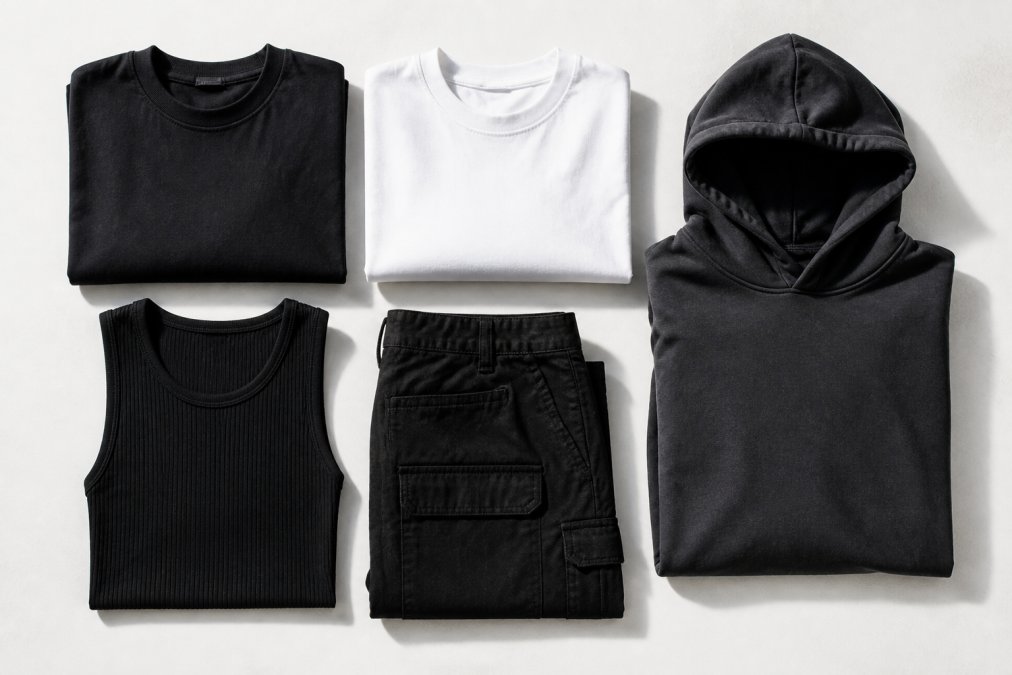
Long lasting basics are garments built from heavy natural fibres, reinforced seams, and construction methods that resist wear across repeated wash cycles, not marketing language about "premium quality." The difference is measurable, and once you know what to look for, it's impossible to unsee.
GSM stands for grams per square metre. It is the single most useful specification when evaluating a cotton tee or hoodie, and most brands deliberately hide it.
A lightweight tee typically sits between 130 and 160 GSM and thins out quickly. A genuinely heavy tee runs from 220 GSM upward, holding its structure and resisting pilling wash after wash. A 240 GSM tee knitted from short-staple cotton will still pill faster than a 200 GSM garment made from ring-spun or combed cotton. Ring-spun cotton aligns the fibres before spinning, producing a tighter, more durable yarn. Combed cotton removes short fibres entirely, offering even better durability.
For hoodies and outerwear, look for French terry or loopback constructions above 350 GSM. According to Textile Exchange's fibre sourcing standards, natural fibres like organic cotton offer better breathability and long-term durability compared to synthetic blends, particularly across high-frequency wash cycles.
A double-needle hem is the minimum standard for a tee worth buying. It creates two parallel rows of stitching that distribute stress across two points instead of one. Single-needle hems unravel faster under tension.
Stitch density refers to how many stitches per centimetre. Higher density means less give in the seam. Loose, widely spaced stitching shows up as seam separation after six months.
Check the shoulder seams specifically, this is where garments fail first. Reinforced shoulder seams distribute the weight of the garment across a woven tape rather than the fabric itself, meaningfully extending lifespan.
High quality clothing passes three physical tests before you even check the label: the pinch test, the stretch test, and the light test.
The pinch test: Pinch a fold of fabric between your fingers and release. Heavy, tightly-woven fabric springs back immediately. Thin fabric stays creased or deformed. This is a direct proxy for fibre density and GSM.
The stretch test: Pull the fabric laterally and watch how it recovers. Good cotton jersey recovers fully within two seconds. Fabric that recovers slowly will bag out at the elbows, collar, and hem within months of wear.
The light test: Hold the garment up to a light source. If you can clearly see your hand through the fabric, the GSM is too low. A proper heavy tee should block most of the light.
When buying basics online, GSM, fibre type, and stitch count become your proxies. As outlined in CHOICE Australia's guide to clothing quality, checking fabric composition labels is a reliable first step when assessing garment durability before purchase.
A men's capsule wardrobe built on long lasting basics should cover every occasion from street to smart casual with fewer than ten pieces, all in neutral colours that layer without conflict.
A heavy oversized tee in black and white is the most versatile piece in any capsule wardrobe. The Urban Classics Heavy Oversized Tee in Black and White are built on a no-logo, no-hype philosophy. At $49.00 each, or bundled at 2 for $80, the heavy cotton weight means the drape stays intact after repeated washing. Buy both colours immediately.


The tall tee solves a specific problem: standard tees on taller frames expose the waistband when you move. The Tall Tee in Black and White extend the hem length while keeping the same clean construction, at $49.00 or 2 for $80. For anyone wearing cargo pants or low-rise bottoms, it is essential.
A ribbed tank top is the most underrated layering piece in a streetwear wardrobe. Worn alone in warmer months, it reads as deliberate. Worn under an open shirt or hoodie, it adds visual texture. The Ribbed Tank Top in Black and White are priced at $39.00 each, or 2 for $60. The ribbed construction provides natural stretch recovery, critical for a piece worn close to the body.
The difference between an outerwear staple and a throwaway layer comes down to fabric weight, organic certification, and whether the hood sits correctly. The Organic Basic Hoody in Black at $99.95 (or 2 for $160) is made from organic cotton, which is better for long-term fabric integrity and is the more responsible choice. This is your seasonal transition piece.

Cuffed cargo pants create a more tapered silhouette at the ankle, working best with chunky sneakers or boots. The Cuffed Cargo Jogging Pants in Black at $119.95 (or 2 for $199) offer a relaxed fit through the leg.
Straight leg cargo pants give a cleaner, more versatile line. The Straight Leg Cargo Pants in Black at $119.95 transition from casual to smart casual without effort. Start with the straight leg if you can only pick one.
The box tee is the workhorse of the wardrobe. The Box Tee in Grey at $29.95 is the brand-free version of Urban Classics' core tee: same premium construction, no neck tag, no logo. At this price point, it is the most accessible entry into the range.
A capsule wardrobe built on black, white, and grey outperforms any colour-forward wardrobe because every piece works with every other piece. A black heavy tee pairs with black cargo pants for monochrome. The same tee pairs with grey box tees in a layered fit. White tees contrast against black bottoms. Grey anchors the whole system.
Neutral colours also age better. A teal tee from two seasons ago reads as dated. A black oversized tee from two years ago reads as classic. Every morning, any combination works. That is the actual value of a neutral palette: wardrobe decision-making reduced to zero friction.
The most common reason heavy cotton tees lose their weight is incorrect washing, not poor fabric quality. Heat is the enemy of cotton structure. It causes fibres to contract, producing both shrinkage and the thin, worn-out feel that customers blame on the garment.
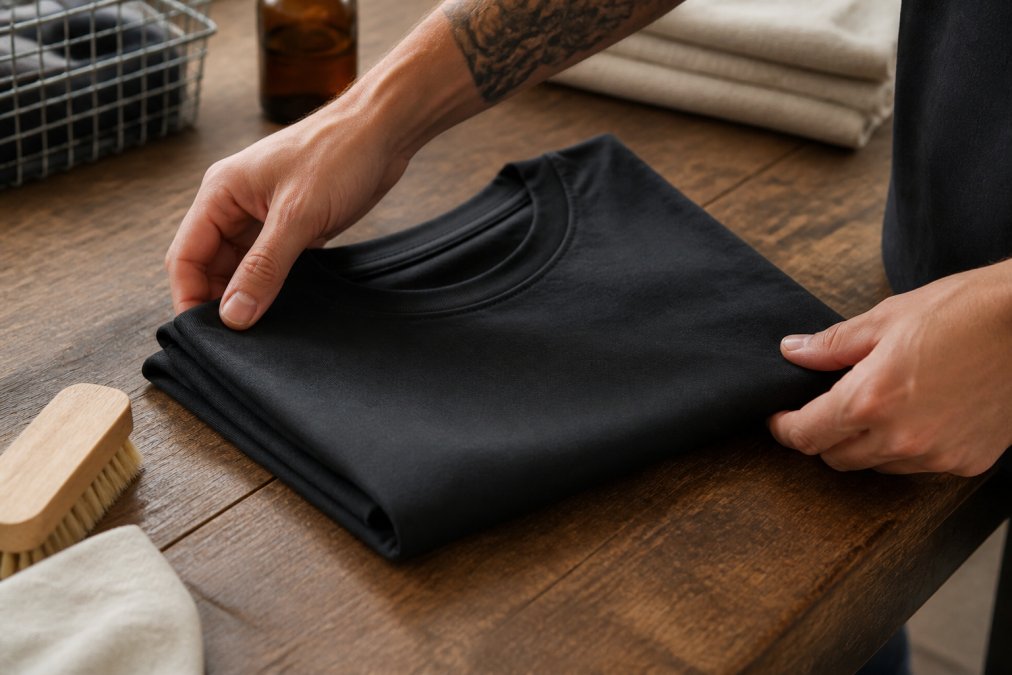
The correct wash cycle for heavy cotton tees is cold water, gentle cycle, inside out.
Cold water prevents the thermal contraction that causes shrinkage. Gentle cycle reduces mechanical agitation, which is the primary cause of pilling. Inside out protects the outer face from abrasion against other garments and the drum, particularly important for dark colours.
According to CSIRO's textile care research, high-temperature washing is one of the leading contributors to premature garment degradation in cotton fabrics.
Tumble drying on high heat causes simultaneous shrinkage and fibre stress. Air drying flat is the correct method for preserving both weight and silhouette. If you must use a dryer, use the lowest heat setting and remove the garment while still slightly damp.
For storage, fold rather than hang. Hanging a heavy cotton tee stretches the shoulder seams and distorts the collar. Fold along the centre seam and stack vertically in a drawer so you can see every tee without disturbing the pile.
Cost per wear is the only honest way to evaluate clothing purchases. Divide the purchase price by the number of times you wear the garment.
A $20 tee worn 15 times before it thins out costs $1.33 per wear. A $49 heavy tee worn 150 times costs $0.33 per wear. The more expensive garment costs four times less in real terms.
This is the argument for investment pieces in basics specifically. Basics worn in daily rotation have the highest wear frequency of any category. The cost per wear calculation rewards quality most where you wear things most.
| Piece | Price | Estimated Wears | Cost Per Wear |
|---|---|---|---|
| Heavy Oversized Tee | $49.00 | 150+ | ~$0.33 |
| Box Tee | $29.95 | 100+ | ~$0.30 |
| Ribbed Tank Top | $39.00 | 120+ | ~$0.33 |
| Organic Hoodie | $99.95 | 100+ | ~$1.00 |
| Cargo Pants | $119.95 | 150+ | ~$0.80 |
The bundle pricing Urban Classics offers accelerates this logic. Two heavy tees at $80 instead of $98 means you are building the wardrobe foundation at a lower per-unit cost from the start. Start with two tees and one bottom, not one of everything. Depth in your most-worn category delivers more value than breadth across all categories.
The most sustainable garment is the one you already own, kept in good condition and worn for as long as possible.
Organic cotton used in pieces like the Urban Classics Organic Hoodie matters because organic cotton farming uses significantly less water and avoids synthetic pesticides. As documented in the Better Cotton Initiative's sourcing standards, organic and responsibly sourced cotton consistently shows lower environmental impact across the full production lifecycle compared to conventional cotton.
Repair extends garment life more than any other single action. A small seam separation at the hem takes five minutes to hand-stitch and adds months or years to the garment's life. A basic sewing kit costs less than a single tee and pays for itself the first time you use it.
For pilling on cotton jersey, a fabric shaver removes surface pills without damaging the underlying weave. Use it on a dry garment, moving in slow circular motions every ten to fifteen washes.
The repair and maintenance checklist for long lasting basics:
A wardrobe built on long lasting basics for men only delivers on its promise if you treat the garments accordingly. The fabric quality is the starting point. How you wash, store, and repair determines whether that quality survives two years or ten.
Check the fabric weight first: heavy cotton tees typically measure 220 GSM or above, and you can feel the difference immediately. Run a pinch test across the chest panel, thin, see-through fabric signals a low GSM count. Inspect the seams for double-stitching and reinforced shoulder joins. A quality tee will also hold its shape when stretched sideways and return without distortion. The Urban Classics Heavy Oversized Tee is built to these standards, which is why it consistently rates as one of the best long lasting basics for men.
A practical men's capsule wardrobe essentials list covers: two to three heavyweight tees in black and white, a ribbed tank top for layering, a neutral hoodie, one pair of cargo pants, and a versatile box tee for daily rotation. Stick to neutral colours so every piece works with everything else. Six to eight items built around quality fabrics and clean silhouettes will cover most everyday wear situations without needing constant replacements.
Wash heavy cotton tees in cold water on a gentle cycle to prevent shrinkage and fibre breakdown. Turn garments inside out before washing to protect the outer surface from friction pilling. Avoid tumble drying on high heat, air dry flat or on a hanger. For cargo pants and hoodies, wash less frequently and spot-clean where possible. Proper garment care extends the life of quality basics significantly, making the cost per wear far lower than cheaper replacements bought every season.
Fast fashion tees typically use 140-160 GSM cotton that thins out after 20 to 30 wash cycles. A heavy-weight basic at 220 GSM or above holds its structure, colour, and silhouette across many more wears. When you calculate cost per wear, a $49 tee worn 150 times costs less than 33 cents per wear. A $15 tee that degrades after 30 wears costs 50 cents per wear and ends up in landfill sooner. Long lasting basics for men are the more economical and sustainable choice over time.
Heavy cotton jersey (220 GSM and above) is the most durable option for everyday tees and tanks because natural fibres handle repeated wash cycles better than synthetic blends. Organic cotton adds sustainability without sacrificing durability. For bottoms, cotton-polyester blends in structured cargo pants offer abrasion resistance alongside breathability. Merino wool works well for layering pieces in cooler months. Avoid rayon or viscose in basics, those fibres weaken quickly with regular washing and wear.
Building a wardrobe that actually holds up over time starts with choosing the right pieces from the right source. Urban Classics specialises in heavy-weight, no-logo streetwear basics built for daily wear and repeated washing, from heavy oversized tees and ribbed tanks to organic hoodies and cargo pants. Shop the full range at Urban Classics and build a wardrobe foundation that earns its cost per wear.
This article was written using GrandRanker
Your cart is currently empty.
Start Shopping