

Streetwear Silhouettes for Different Body Types
Learn how to choose streetwear silhouettes for different body types. Practical fit, proportion and layering advice for oversized tees and cargo pants.
Learn how to choose streetwear silhouettes for different body types. Practical fit, proportion and layering advice for oversized tees and cargo pants.

Last Updated: October 7, 2026
Streetwear silhouettes are the overall shapes your clothing creates on your body, and getting them right matters more than any single garment. The core idea is simple: every silhouette choice answers a question about volume, waist and length. Answer those three questions and the outfit falls into place.
Every outfit decision comes down to three questions: where does the volume sit, where is the waist, and where does the hem land? Volume is how much fabric a garment adds to a part of your body. Waist is the visual line your top and bottom create together.
Answer those three before you buy anything. A boxy top adds volume up top. Wide-leg trousers add it below. A high-waisted cut moves the waist line up. A cropped hem shortens the torso.
Knowing your body shape tells you which streetwear pieces to reach for and which to leave on the rack. Body shape is the relationship between your shoulders, waist and hips, not your weight or height. Measure across the widest part of your shoulders, your natural waist (the narrowest point, usually just above the navel), and your hips at the fullest point.
A tape measure and a mirror are enough. Most practitioners find that measuring over a fitted tee gives a more usable number than measuring over bare skin, because that is how the garment will actually sit.
The four shapes above describe proportion, not size, and they do not cover everything. Treat them as a starting point, not a rule.
Gender-diverse styling often mixes elements from more than one column, and that is fine. The three questions of volume, waist and hem apply regardless of which section of the shop a garment came from. Use the shape that matches your measurements, not the label on the rack.
An oversized tee works when one part of the outfit stays fitted. The mistake most people make is going oversized everywhere at once, which erases your proportions entirely. Pick one oversized piece, then keep the rest closer to the body.
A heavy oversized tee in a structured fabric holds its shape instead of collapsing, which keeps the boxy look intentional rather than sloppy. Pair it with a slimmer pant, or tuck the front hem slightly to bring the waist back into view.

Layering is where streetwear gets interesting, and it is also where proportions go wrong fastest. Each layer adds volume, so the rule is to add volume where you want width and stop there.
If your shoulders are narrower than your hips, layer up top: an open overshirt over a tee broadens the upper body. If your shoulders are broad, keep layers open and vertical rather than bulky and horizontal. A longer outer layer over a shorter tee creates a stepped hem that reads clean and deliberate.
Cargo pants carry volume by design, so the top half has to answer for it. Wide-leg and pleated cargos add width through the leg; if the top is equally wide, the whole outfit turns into one block.

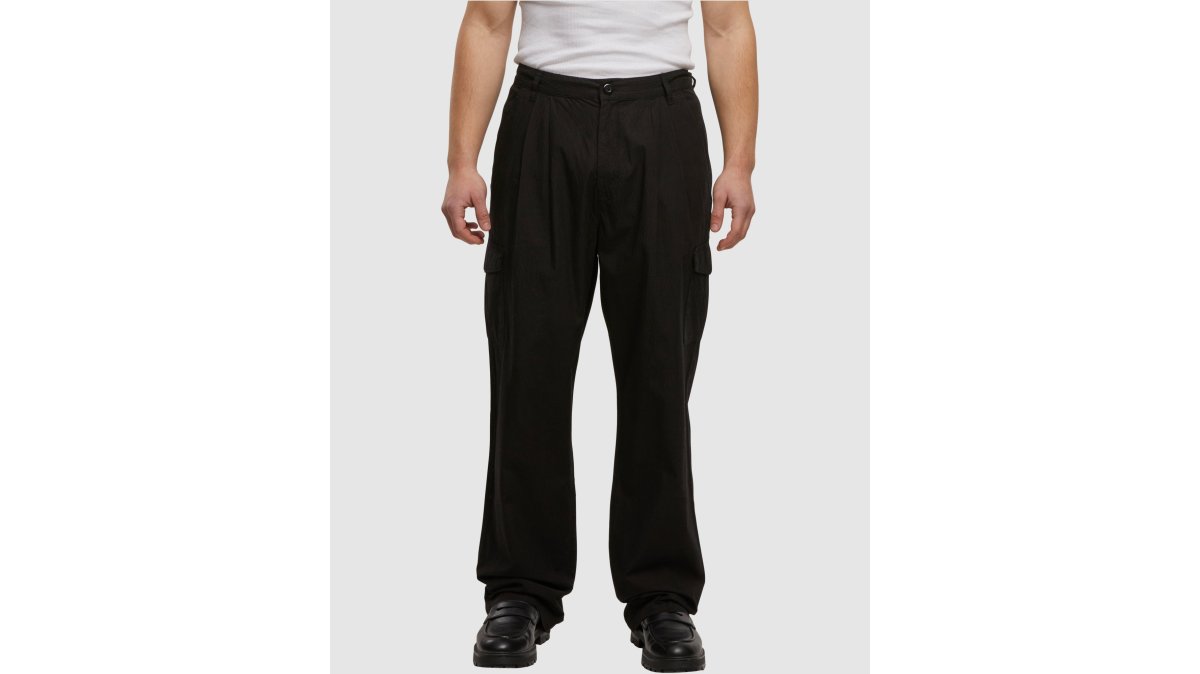
A common approach is to let the pants lead and keep the top cleaner: a fitted or slightly shaped tee, a tucked front, or a shorter jacket that stops at the waist.
Waist definition is optional in streetwear, but it is a tool worth knowing. A belt, a tucked hem or a high-waisted cut all pull the eye to the narrowest part of your torso, which adds shape to an otherwise straight silhouette. The straight silhouette is a legitimate look, not a failure.
Where streetwear differs from general styling advice is that the waist line is often created by layering rather than by a belt. An open overshirt worn over a tucked tee creates two vertical edges that frame the waist without cinching it.
Wide Pleated Cargo Pants - Black →
A straight silhouette is a deliberate choice, and it works best when the fabric does the work. Heavy cotton, brushed fleece and structured twill hold a straight line; light jersey collapses into the body and loses the shape you were aiming for. If you are going straight, go structured.
Layering changes the equation with the seasons. In cooler months, a longer outer layer over a shorter base adds a stepped hem that reads as a waist line without any cinching. In warmer months, a single oversized tee with a front tuck is often enough.
Fit is not the same as size, and confusing the two causes most online returns. Size is the label on the garment; fit is how that garment sits on your specific frame.
Before ordering, measure your chest, waist and preferred length, then compare those numbers against the size chart rather than your usual label. If you want an oversized look without going up a full size, check the garment's actual measurements first.
Inclusive sizing is about offering a genuine range of measurements, not just larger labels on the same cut.
Getting your streetwear silhouettes right comes down to volume, waist and hem, and it takes a few honest tries to learn your own numbers. Most people buy the shape they like on someone else rather than the shape that suits their frame.
Start with your natural proportions rather than trends. If your shoulders are wider than your hips, keep volume lower with wide-leg or straight trousers. If your hips are wider, add volume up top with an oversized tee or layered jacket. The goal is balance: streetwear silhouettes work when the widest point of your outfit matches your frame instead of fighting it. Try one relaxed piece at a time, then build the rest of the outfit around it.
Yes, but keep the length controlled. An oversized tee that finishes around the hip bone adds width without eating height, while a tee that drops to mid-thigh shortens the leg line. Pair cropped or cuffed pants with a slightly shorter oversized top, and keep colours close in tone so the eye runs vertically. A tall tee works well as a layer under a jacket, where the extra length reads as intentional rather than accidental.
Only one half of the outfit should carry the volume. If you wear a heavy oversized tee, choose a straighter or cuffed pant rather than a wide pleated one. If you want wide-leg cargo pants, keep the top closer to the body or tuck it slightly at the front. This single rule prevents the shapeless look that puts people off oversized streetwear, and it works across every body shape.
Broader shoulders already carry visual weight, so avoid structured jackets with strong shoulder lines. Soft, dropped-shoulder tees and relaxed hoodies follow your frame instead of exaggerating it. Balance the top with volume below: wide-leg trousers, a straight silhouette or relaxed cargo pants. A V-neck or open collar also breaks up the shoulder line better than a high crew neck.
Cargo pants are the volume piece, so treat everything above them as the counterweight. A fitted or shaped tee, a tucked-in long tee, or a cropped jacket keeps the waist visible and stops the outfit reading as one solid block. Cuffed cargo jogging pants work especially well for shorter builds because the tapered ankle restores a clear leg line. Add a belt if the waistband sits high.
Layer with pieces of different weights rather than stacking heavy items. A long-sleeve tee under a short-sleeve oversized tee adds depth with almost no bulk. A light overshirt over a heavy tee does the same. Keep each layer a different length so the eye reads separate pieces, and stop at two or three layers. Anything more and the silhouette stops being readable.
Straight-leg trousers are the most forgiving cut in streetwear because they follow the leg without clinging or flaring. They suit pear shapes by skimming the hip, rectangles by adding a clean vertical line, and hourglass figures by keeping the waist-to-hip transition visible. They also pair with almost any top, which makes them a sensible starting point if you are rebuilding a wardrobe around proportion.
At Urban Classics, we build basics around fit and fabric so the silhouette does the work for you. Our heavy oversized tees hold their structure, our wide pleated cargo pants and cuffed cargo jogging pants balance volume through the leg, and our range covers the essentials you will actually rewear. Get started with Urban Classics and build a wardrobe where every piece earns its place.
Your cart is currently empty.
Start Shopping