

How to Wash Heavy Cotton Tees: Care Guide
Wash heavy cotton tees correctly to prevent shrinking and fading. Learn cold water washing, gentle cycles, air drying, and stain removal techniques.
Wash heavy cotton tees correctly to prevent shrinking and fading. Learn cold water washing, gentle cycles, air drying, and stain removal techniques.

Last Updated: August 25, 2026
Heavy cotton tees demand deliberate care to protect fibre integrity, prevent premature shrinkage, and maintain their substantial feel. Urban Classics specialises in heavy oversized tees designed for durability, which means understanding proper washing is essential for long-term performance.

Most people treat heavy cotton like regular cotton, which strips away the garment's qualities. Heavy cotton fibres are thicker and denser, absorbing more water and remaining vulnerable to heat and harsh detergents. A single careless wash cycle can compromise years of wear. What separates people who keep their tees fresh from those who see fading within months comes down to deliberate choices: temperature, detergent, and drying method.
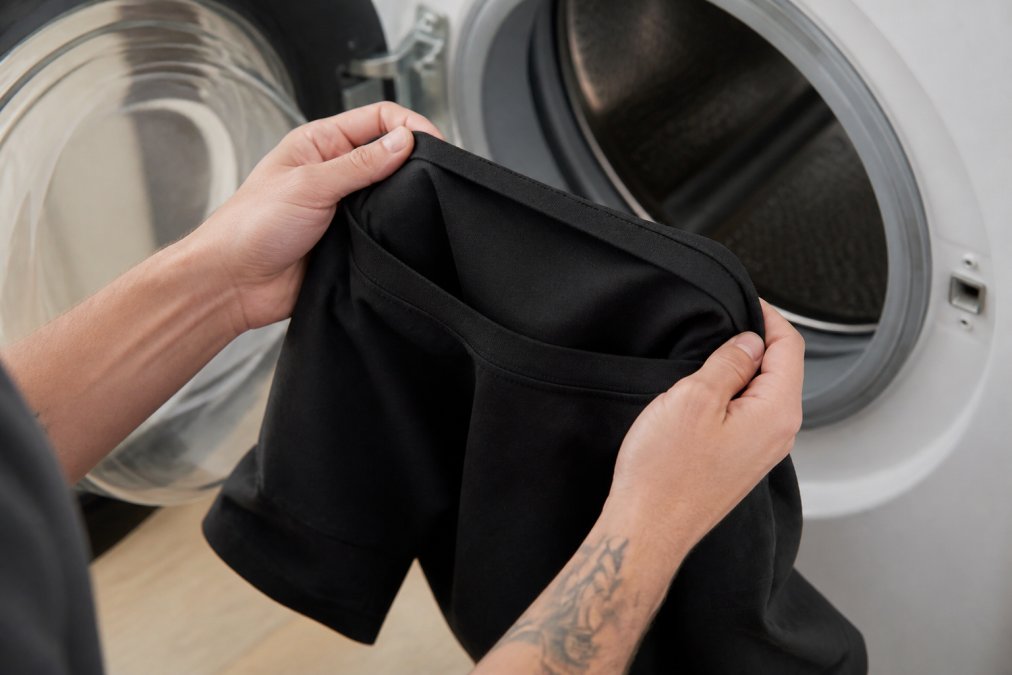
Taking five minutes to prepare properly prevents damage that no amount of careful washing can undo later.
Read the care label before every wash. It tells you the maximum water temperature, bleach compatibility, and recommended drying method. For Urban Classics heavy oversized tees, these instructions are designed specifically to protect heavyweight cotton. If the label says cold water, that's the threshold beyond which fibres weaken. If it says no tumble dry, that's because heat would damage fabric integrity permanently.
Care labels aren't generic warnings, they're specific to how that garment was constructed and what the fabric can tolerate. Respecting those limits is the difference between a tee lasting and one looking tired after six months.
Turning your tee inside out before washing protects the visible surface from friction against other garments and the drum. The inside, which nobody sees, takes the wear instead. This is especially important for darker colours, black and deep navy tees show fading more obviously. After just a few washes with the outside exposed, you'll notice duller colour. Turn it inside out, and that fade takes months longer to appear.
This step takes five seconds and costs nothing.
Separate blacks and deep colours into one load, whites and light neutrals into another. This ensures each load gets optimal treatment for that colour range, keeping blacks from fading and preventing dye bleeding. Heavy cotton holds dye differently than lighter fabrics, the denser weave means dyes penetrate deeper, creating richer colour that requires intentional protection.
Shrinkage is almost entirely preventable if you understand what causes it: heat and agitation. Cold water and gentle handling are the solution.
Cold water is non-negotiable for heavy cotton. Warm or hot water opens up cotton fibres, allowing them to relax and contract, that contraction is shrinkage. Cold water keeps fibres stable, so the garment stays the same dimensions wash after wash (peer-reviewed research). Modern detergents are formulated to work effectively in cold water.
Run your wash at the coldest setting your machine offers. The water temperature should feel genuinely cold to your hand. This is the single most important temperature decision you'll make.
Use enzyme-based detergents designed to break down organic matter, sweat, oils, food residue. Avoid anything labelled "heavy-duty" or "extra strength," which typically means more aggressive chemicals that weaken fibres over time.
Liquid detergents work better than powders for cold water washing. Powders don't dissolve effectively in cold water, potentially causing discolouration. Use less detergent than you think you need, heavy cotton holds detergent residue easily because of its dense weave. Reduce the recommended dosage slightly. Your tee will still come clean, and the fabric will stay softer.
The gentle cycle uses less agitation and slower spin speed, protecting fabric integrity. Agitation causes pilling, colour fading, and fibre weakening. Set the spin speed to low or medium, never high. A high spin speed wrings the fabric aggressively, causing creasing and weakening at stress points.
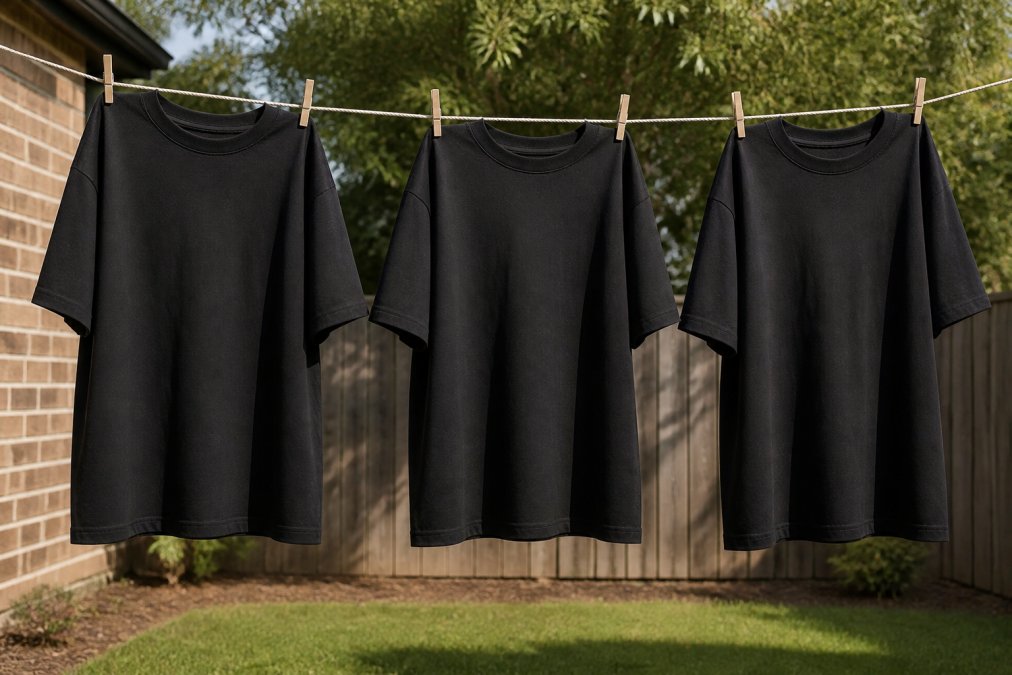
How you dry your tee matters as much as how you wash it. Tumble drying is fast but damages heavy cotton. Air drying takes longer but preserves everything you've protected through careful washing.
Tumble dryers use heat, which causes shrinkage that cold water washing prevented. Heat weakens fibres by drying them out completely and can cause permanent creasing at seams and folds. It fades colour faster than any other single factor. Even low-heat settings are too hot for heavy cotton, the heat is cumulative. After ten tumble-dried washes, your tee will have lost noticeably more colour than one air-dried ten times (peer-reviewed research).
Fibre weakening from heat is invisible at first but emerges when fabric starts to pill or seams tear more easily. Avoiding the dryer entirely means your tee stays strong and dense for years.
Lay the tee flat on a clean, dry surface if possible, a drying rack, clean towel, or mesh drying net. Flat drying prevents the weight of water from stretching the garment. If you must hang-dry, wait until the tee has lost most of its water weight first. Use a wide hanger that supports the shoulders properly; narrow hangers create permanent marks in heavy cotton.
Ensure good air circulation. A fan nearby speeds up drying without adding heat. Avoid direct sunlight for extended periods, especially on dark colours. Heavy cotton typically takes 24-48 hours to dry completely. The payoff is a tee that looks and feels the same after many washes as it did after five.
Treat stains before washing, never after. Blot the stain immediately with a clean cloth to remove excess liquid, don't rub, as rubbing pushes the stain deeper into fibres.
For organic stains like sweat or food, apply enzyme-based stain remover directly to the spot. Let it sit for 10-15 minutes, then rinse with cold water. For oil-based stains, use a small amount of dish soap before washing. Always test any stain treatment on an inconspicuous area first.
Never put a stained tee in the dryer. Heat sets stains permanently. Air dry it instead, and if the stain remains after the first wash, repeat the treatment before the next wash.
Water hardness, the mineral content in your tap water, affects how detergent works and how fabric responds to washing. Hard water reduces detergent effectiveness, meaning detergent residue builds up in the fabric, making it feel stiff and look dull.
If you have hard water, use slightly more detergent than the bottle recommends, start with the recommended amount plus 10-15%. Alternatively, add a water softener product designed for laundry. If you're unsure whether you have hard water, contact your local water authority or use a simple test kit available at hardware stores.
Store tees in a cool, dry place away from direct sunlight. A dark drawer or cupboard is ideal. Fold rather than hang for long-term storage, hanging puts constant stress on shoulders and neckline, causing stretching and permanent creasing. Ensure storage areas have good air circulation and aren't damp.
Wash before storing for extended periods. Sweat, oils, and bacteria on unwashed fabric can set into fibres during storage, causing permanent stains or odours. A clean tee stored properly will emerge looking and smelling fresh.
| Step | Action | Why It Matters |
|---|---|---|
| 1 | Check care label | Confirms temperature and cycle limits for your specific tee |
| 2 | Turn inside out | Protects outer surface from friction and fading |
| 3 | Sort by colour | Ensures each colour group gets optimal treatment |
| 4 | Use cold water | Prevents shrinkage and fibre weakening |
| 5 | Choose enzyme detergent | Cleans effectively without harsh chemicals |
| 6 | Use gentle cycle | Minimises agitation and protects fabric integrity |
| 7 | Low spin speed | Reduces stress on fibres during water removal |
| 8 | Air dry flat or hang | Prevents heat damage and maintains shape |
| 9 | Avoid direct sunlight | Prevents colour fading during drying |
| 10 | Store flat in cool space | Maintains shape and prevents long-term damage |
This routine takes slightly longer than standard washing, but the difference in longevity is substantial. Your Urban Classics heavy oversized tee will look and feel the same after many washes as it did after five.
Heavy cotton tees are an investment in basics that actually last. The care you put in during washing directly determines whether you get two years or five years of wear. Urban Classics designs these tees to be durable, but durability only happens if you wash them properly. Start with the routine above, adjust based on your water hardness and local conditions, and your tees will reward you with years of consistent fit and appearance. Shop Urban Classics heavy oversized tees and commit to the care routine that keeps them performing, it's the difference between basics that fade and basics that become wardrobe staples.
Heavy weight cotton can shrink if exposed to hot water and high heat. Cold water washing and air drying significantly reduce shrinkage risk. Most shrinkage occurs in the first wash, so proper technique from the start protects your tees. Turning garments inside out and using a gentle cycle further minimises fabric stress and shrinkage.
Cold water is ideal for washing heavy cotton tees. Cold water prevents colour fading, reduces shrinkage risk, and protects fabric fibres from weakening. Even mildly warm water can compromise the durability of heavyweight cotton. Always check the care label, but cold water washing is the safest choice for maintaining shape, colour, and fabric integrity over multiple washes.
Air drying is the best method for heavy cotton tees. Hang them on a clothesline, drying rack, or lay them flat on a clean surface away from direct sunlight. Avoid tumble drying, which weakens fibres and causes shrinkage. Air drying preserves shape retention and extends the life of your garment. Allow 24-48 hours for complete drying depending on humidity and air circulation.
Yes, turning heavy cotton shirts inside out protects the outer surface from fading and pilling. This simple step preserves colour vibrancy and maintains the garment's finished appearance. Inside-out washing also reduces friction between the tee and other garments, protecting fabric integrity during the wash cycle. Always turn your tees inside out as part of your pre-wash routine.
This article was written using GrandRanker
Your cart is currently empty.
Start Shopping