

How to Wash Swimwear Properly: 7 Steps
Learn how to wash swimwear properly to extend durability. Discover hand-washing techniques, machine-washing tips, chlorine removal, and drying methods.
Learn how to wash swimwear properly to extend durability. Discover hand-washing techniques, machine-washing tips, chlorine removal, and drying methods.

Last Updated: August 22, 2026
How to wash swimwear properly isn't just about keeping your gear looking fresh, it's about preserving the structural integrity of the fabric itself. Chlorine, salt water, sunscreen, and sweat break down synthetic fibres over time, and most people's washing habits accelerate that damage rather than prevent it (peer-reviewed research). The difference between a swimsuit that lasts one season and one that lasts three comes down to a few deliberate steps after you leave the water.
Urban Classics knows this matters. We craft durable swimwear designed for active men who expect their basics to perform wash after wash. But even premium fabrics, polyester, nylon, elastane blends, need the right treatment to stay elastic, vibrant, and structurally sound. Washing swimwear properly isn't complicated, but it does require you to break some of the habits you use for everyday laundry.

Rinse your swimwear with fresh water as soon as you leave the pool or ocean. This removes chlorine, salt, sunscreen residue, and sweat before they set into the fabric and cause degradation.
Use cool to cold water, not hot. Hot water opens up the fibre structure and allows chemicals to penetrate deeper (peer-reviewed research). Cold water rinses away surface contaminants without weakening the elastane or synthetic fibres. Rinse thoroughly, working the water through the fabric with your hands. Pay special attention to the leg openings, waistband, and seams where residue accumulates.
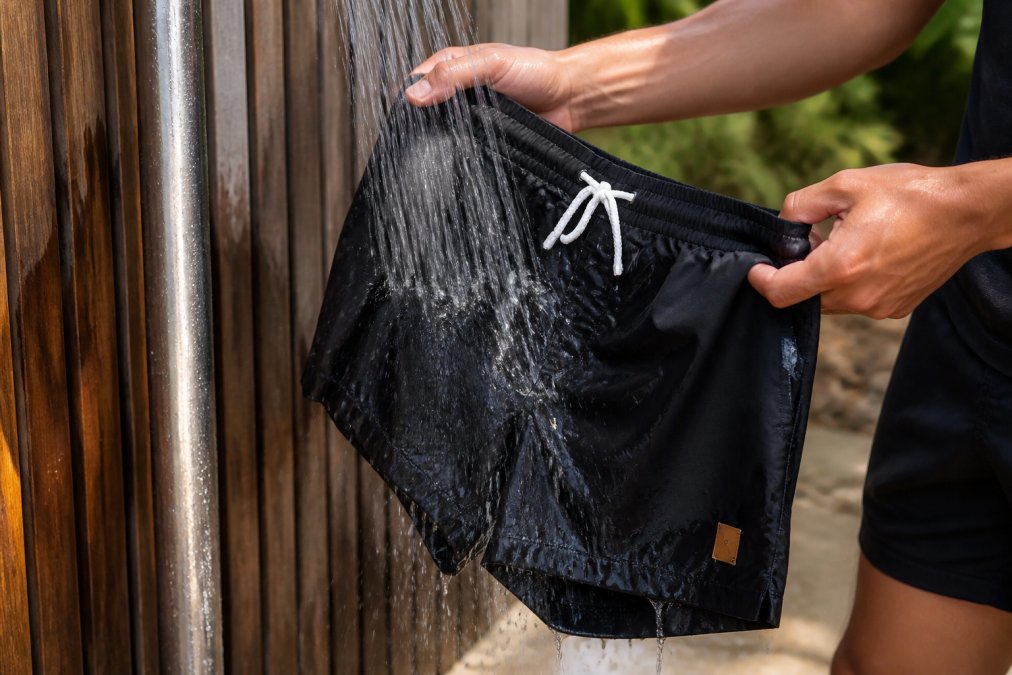
If you're at the beach and don't have immediate access to fresh water, at least rinse your swimwear when you get home, the same day. Leaving chlorine or salt in the fabric overnight accelerates fibre degradation and can cause permanent discolouration. Even a quick rinse in the shower makes a measurable difference.
Chlorine is the primary enemy of swimwear durability. It oxidises the dyes, weakens elastane, and leaves a chemical residue that continues degrading fabric even after rinsing. Removing chlorine properly requires going beyond a simple rinse.
After your initial cold-water rinse, soak your swimwear in fresh water for 10-15 minutes. This allows the cold water to fully penetrate the fabric and flush out remaining chlorine particles. For heavy chlorine exposure, if you've spent hours in a pool, extend the soak to 20 minutes.
Some people use a mild vinegar solution (one part white vinegar to four parts water) for a 15-minute soak. The acidity helps neutralise chlorine residue and can restore some vibrancy to faded colours. However, vinegar isn't essential if you're rinsing and soaking thoroughly with fresh water alone.
Never use hot water for soaking. Cold or room-temperature water is critical. Hot water causes the synthetic fibres to relax and can allow chlorine to penetrate deeper rather than flush out. After soaking, rinse once more under cool running water to remove any remaining chlorine or vinegar solution.
Hand washing is ideal, but if you use a washing machine, follow these specific steps to minimise damage. Many people throw swimwear in with regular laundry and wonder why it deteriorates so quickly.
Place your swimwear inside a mesh laundry bag. This protects the fabric from the agitation and friction that weakens elastane and causes pilling. Use the delicate or gentle cycle, never a standard or heavy-duty cycle. Set water temperature to cold. Hot water opens the fibre structure and allows detergent to penetrate too deeply, leaving residue that breaks down elastane over time.
Use only a mild detergent, no bleach, no fabric softener. Bleach degrades synthetic fibres directly. Fabric softener coats the fibres and prevents water from rinsing out properly, trapping chemicals inside the fabric. Choose a gentle, pH-balanced detergent designed for delicate fabrics. Use less detergent than you would for regular laundry; a small amount goes a long way with synthetic fibres.
Run a rinse cycle after the wash to ensure all detergent residue is removed. Residual detergent left in the fabric continues breaking down elastane and can cause discolouration over time. Some washing machines have an extra rinse option, use it.
Remove your swimwear immediately after the cycle finishes. Don't leave it sitting wet in the machine, as this can cause mildew and colour fading. Air dry flat (see Step 5 for drying techniques).
| Washing Machine Setting | Why It Matters |
|---|---|
| Mesh laundry bag | Protects fabric from friction and agitation damage |
| Delicate or gentle cycle | Reduces mechanical stress on elastane fibres |
| Cold water | Prevents fibre relaxation and detergent penetration |
| Mild detergent only | Avoids chemical breakdown of synthetic fibres |
| Extra rinse cycle | Removes all detergent residue that weakens fabric |
Hand washing is the gold standard for swimwear care. It gives you complete control over water temperature, agitation, and detergent concentration. If you want your swimwear to last three years or more, hand wash regularly.
Fill a sink or basin with cool water. Add a small amount of mild detergent, roughly a quarter of what you'd use for a full load of laundry. Submerge your swimwear and gently agitate it with your hands for 2-3 minutes. Don't wring, twist, or scrub. Gentle movement is enough to lift dirt and sweat from the fibres without stressing the elastane.
Pay attention to areas that absorb sweat: the waistband, leg openings, and the seat. These areas need slightly more attention, but still keep agitation gentle. Rinse thoroughly under cool running water until the water runs clear and you can't smell detergent anymore. Residual detergent is a common cause of premature elastane breakdown.
After rinsing, gently squeeze out excess water, don't wring. Press the swimwear against the side of the sink or basin to remove water without twisting the fabric. Then proceed to drying.
How you dry your swimwear determines whether the elastane retains its shape and stretch. Most people make critical mistakes here, wringing water out aggressively, hanging in direct sunlight, or using heat.
Never use a clothes dryer. Heat damages elastane permanently. Elastane is thermoplastic, meaning heat causes it to relax and lose elasticity (peer-reviewed research). Once elastane has been heat-damaged, it doesn't recover. The same applies to direct sunlight: UV rays degrade synthetic fibres and fade colours. Avoid hanging your swimwear in direct sunlight or near windows where UV exposure is intense.
The correct method is air drying flat. Lay your swimwear on a clean, dry towel in a well-ventilated space away from direct sunlight. Indoors near an open window is ideal. Flat drying prevents stretching that occurs when swimwear hangs wet and heavy. The weight of water pulling on wet fabric causes permanent stretching, especially in the shoulder seams and leg openings.
If you need to dry your swimwear faster, place it on a towel in a well-ventilated bathroom or laundry room where air circulation is good. You can also lay it on a clean towel outdoors in shade, under a covered patio or in dappled shade from a tree. Just avoid direct sunlight.
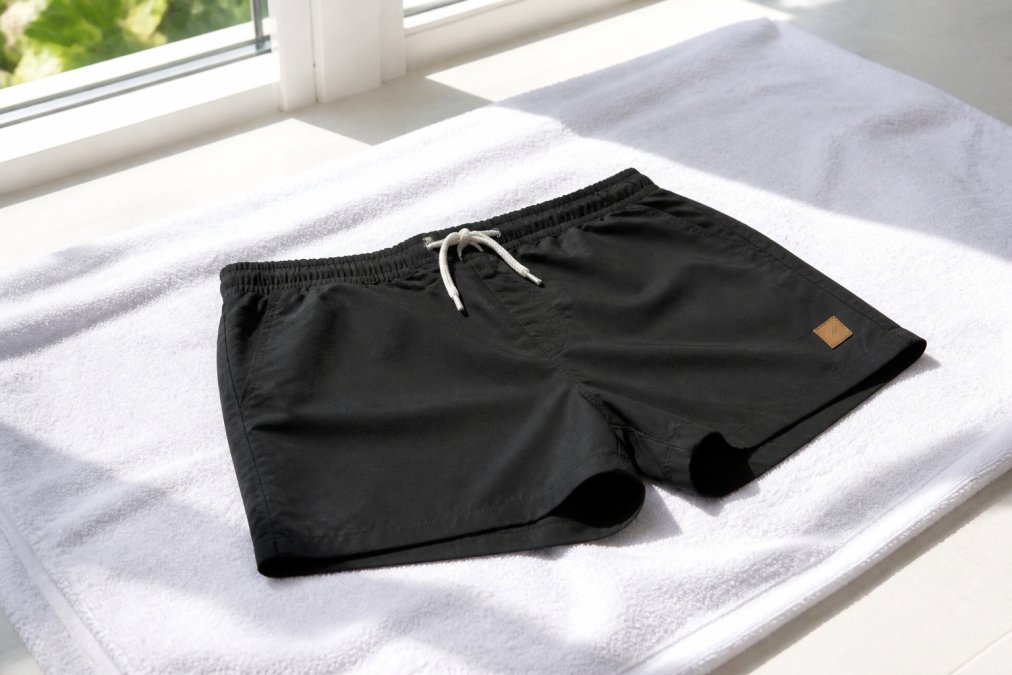
Never wring your swimwear before drying. After rinsing, gently squeeze it against the sink basin or press it lightly between two towels to remove excess water. Then lay it flat. Drying takes 24-48 hours depending on humidity and air circulation, but this patience is what keeps elastane elastic and fibres intact.
Proper care extends the life of any swimwear, but starting with a quality piece makes a real difference. Urban Classics designs swimwear specifically for active men, board shorts that hold their shape, colours that resist fading, and elastane blends that maintain stretch through dozens of washes.
The Block Swim Shorts in Black are engineered for durability. Heavy-weight synthetic construction resists pilling and colour fading. The elastane blend maintains elasticity wash after wash when cared for properly. Available in multiple colours, Black, Pink, Neon Pink, and Olive, these shorts are designed for both pool and beach use.

What separates durable swimwear from disposable alternatives is fabric weight and fibre quality. Lightweight synthetic fabrics degrade faster because there's less material to absorb stress. Heavy-weight construction distributes wear across more fibres, extending the lifespan. Urban Classics prioritises weight and density in every piece.
If you're buying new swimwear, look for pieces that specify elastane content (typically 15-20%) and overall weight. Higher elastane content means better stretch recovery. Heavier fabric means longer durability. When you combine quality materials with the care steps outlined above, you're investing in swimwear that genuinely lasts.
Understanding what damages swimwear helps you protect it. Here are the mistakes that shorten swimwear life most dramatically.
Wringing and twisting: This is the single most damaging habit. Wringing concentrates stress on elastane fibres and causes them to snap. Squeeze gently instead, press against the sink, not twist.
Using hot water: Hot water opens the fibre structure and allows chemicals to penetrate deeper. It also causes elastane to relax permanently. Stick to cold or cool water for every rinse and wash.
Skipping the initial rinse: Chlorine and salt begin degrading fabric immediately. Waiting even a few hours before rinsing allows significant damage. Rinse the same day, ideally within 30 minutes of leaving the water.
Machine washing without a mesh bag: The agitation of a standard wash cycle stresses elastane and causes pilling. A mesh bag costs a few dollars and dramatically reduces mechanical damage.
Using fabric softener: Fabric softener coats synthetic fibres and prevents water from rinsing out completely. It traps chemicals inside the fabric and accelerates degradation. Never use it on swimwear.
Hanging wet swimwear: The weight of water pulls on wet fabric and causes permanent stretching. Lay flat to dry instead. This is especially critical for the shoulder seams and leg openings, which are already under stress from wearing.
Drying in direct sunlight: UV rays fade colours and degrade synthetic fibres. Shade drying preserves colour and structural integrity.
Using a clothes dryer: Heat permanently damages elastane. Once elastane has been heat-damaged, it loses elasticity and doesn't recover. Air dry every time.
Leaving wet swimwear in the washing machine: Mildew can develop within hours if swimwear sits wet. Remove immediately after the cycle finishes and hang to dry.
Mixing with regular laundry: Regular detergent is too harsh for swimwear. Chlorine residue in regular laundry can also damage swimwear. Wash swimwear separately with mild detergent.
Proper swimwear care is straightforward once you understand what damages fabric. Cold water, mild detergent, gentle handling, and flat air drying preserve elastane and extend the life of every piece. Urban Classics designs swimwear built for durability, the Block Swim Shorts are engineered to handle regular use when cared for properly. Follow these steps and your swimwear will maintain its shape, colour, and stretch for years. Get started with Urban Classics and invest in basics that actually last.
A: Yes, but only on a gentle cycle with cold water and mild detergent. Machine washing works best for durable synthetic fabrics like nylon and polyester. Always use a mesh laundry bag to protect the fabric from agitation, and avoid the spin cycle. Hand washing remains the gentler option if you want maximum longevity for your swimwear.
A: Rinse immediately after swimming with fresh cold water to remove chlorine. For sunscreen residue, soak the swimwear in cold water with a small amount of mild detergent for 15-30 minutes before washing. Chlorine can degrade synthetic fibres and cause yellowing, so prompt rinsing is essential. Avoid using bleach, which accelerates fabric degradation and damages elastane fibres.
A: Hand washing is gentler and better for preserving fibre elasticity, especially for high-performance fabrics containing spandex or elastane. Machine washing on a gentle cycle is acceptable for everyday wear if you use a mesh laundry bag and cold water. The choice depends on how often you wear your swimwear and how long you want it to last. For premium, durable swimwear, hand washing extends the life significantly.
A: Always air dry in shade on a flat surface or hanging line. Avoid direct sunlight and UV rays, which cause fabric degradation and fading. Lay the swimwear flat on a clean towel in a well-ventilated area, or hang it on a line away from heat sources. Never use a tumble dryer, as high heat damages synthetic fibres and breaks down elastane, reducing the garment's lifespan and fit.
This article was written using GrandRanker
Your cart is currently empty.
Start Shopping