

Is Premium Streetwear Worth It? A 2026 Buyer's Guide
Is premium streetwear worth it? We break down cost per wear, fabric quality and resale value so you can decide before you spend. Explore the real numbers.
Is premium streetwear worth it? We break down cost per wear, fabric quality and resale value so you can decide before you spend. Explore the real numbers.

Last Updated: September 13, 2026
Walk into any major retailer and you can walk out with a graphic tee for the price of a coffee. Walk into a premium basics label and the same garment costs five times as much. So is premium streetwear worth it, or are you just paying for a logo and a mood board?
Here's the short answer: premium streetwear is worth it when the garment outlives three cheap replacements and still looks good doing it. At Urban Classics, that's the whole premise behind our no-logo, no-hype approach to heavy oversized tees, cargo pants and hoodies. The price difference between a $15 tee and a $49 one isn't fabric alone. It's fabric weight, stitch density, and cut consistency.

The Australian Competition and Consumer Commission guide to country of origin and product claims is a useful starting point for understanding what brands can and can't claim about quality. Below, we break down the actual maths, the construction signals to check in-store, and the moments where premium is a trap rather than an investment.
High quality streetwear is identifiable through measurable construction details, not brand reputation. Most guides stop at 'check the stitching' and 'feel the fabric'. That is not a checklist, it is a vibe. This section goes further: the specific fabric specifications, cotton types and stitch techniques that separate a garment built to last from one built to sell.
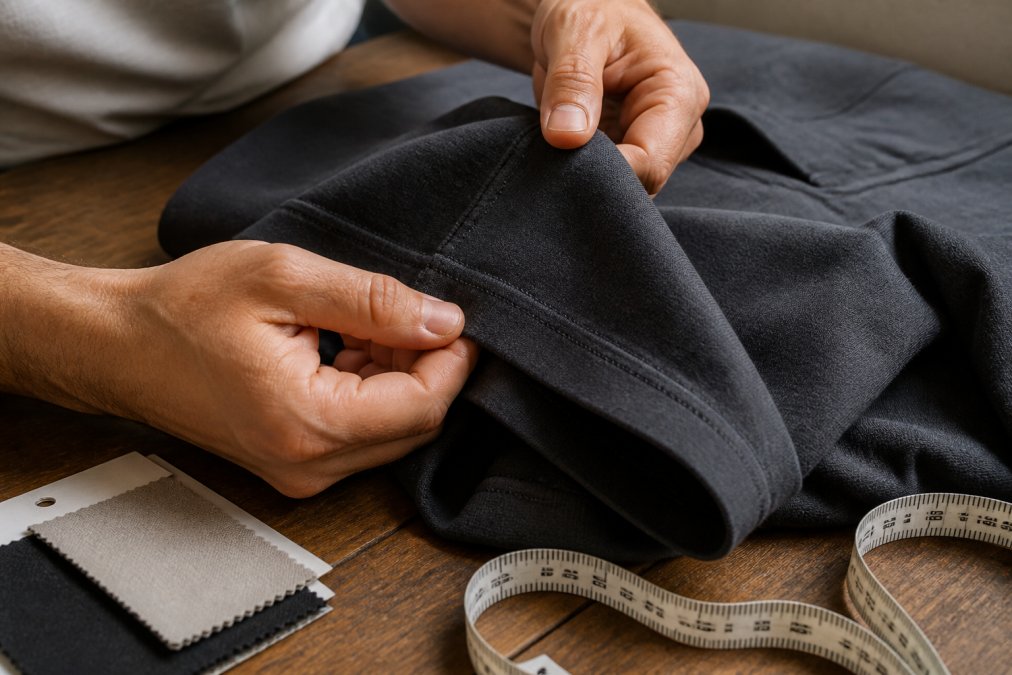
GSM (grams per square metre) is the standard measure of fabric density. A basic fast-fashion tee typically sits around 140-160 GSM and feels thin against the skin. Heavyweight streetwear basics start around 220 GSM and climb from there. Higher GSM means the garment holds its shape, drapes properly and resists the see-through problem that plagues cheap cotton.
But GSM alone is not enough. Two 240 GSM tees can behave completely differently depending on the cotton type and knit structure.
The cotton itself matters as much as the weight.
Stitch density matters, but so does stitch type. Count the stitches per inch along a hem, then look at how the seam is finished.
A common mistake is judging quality by feel alone in the change room. Fabric softness can be added with chemical finishes that wash out. Construction cannot be faked. If you want a single test, turn the garment inside out and look at the inner seams. That is where the truth is.
Cost per wear is calculated by dividing a garment's purchase price by the number of times you realistically wear it. The formula is simple: cost per wear = price ÷ wears. A $15 tee worn 15 times before it fades costs $1.00 per wear. A $49 heavy oversized tee worn 150 times costs roughly $0.33 per wear.
That's the entire argument for premium basics in one equation. The cheap tee isn't cheaper. It's just cheaper today.
| Garment | Price | Realistic Wears | Cost Per Wear |
|---|---|---|---|
| Fast-fashion tee | $15 | 15 | $1.00 |
| Mid-tier tee | $30 | 60 | $0.50 |
| Heavyweight oversized tee | $49 | 150+ | $0.33 |
| Fast-fashion hoodie | $40 | 25 | $1.60 |
| Organic basic hoody | $99.95 | 200+ | $0.50 |
Resale value is the most overrated reason to buy premium streetwear, and the most misunderstood. The pieces that actually hold or gain value are not the ones hype culture promotes. They are the boring ones: plain heavyweight tees, neutral cargo pants, unbranded hoodies in black, grey or navy. Hype-driven drops can spike, then collapse once the trend cycle moves on, leaving the buyer holding a garment nobody wants at any price.

The mechanism behind depreciation is simple. A garment loses value the moment it is worn, unless demand for that specific piece outstrips supply. Limited drops create artificial scarcity, which inflates resale in the short term. But scarcity only holds value if the underlying garment is desirable independent of the drop. Most collab pieces are not. Strip the collaboration and you are left with a mid-weight tee that would sell for a fraction of the resale price.
A more useful way to think about it is residual value, not resale value. Residual value is what the garment is worth to you after two years of wear. Anything it fetches second-hand is upside, not the point of the purchase.
If you do want to buy with resale in mind, three signals matter more than brand:
Australian Competition and Consumer Commission guidance on misleading conduct and resale claims is worth reading if you are buying with the intention of on-selling, because consumer guarantees do not transfer to a private resale in the same way they do from a retailer.
The trap is buying premium for resale. Buy premium for wear. If it happens to hold value, that is a bonus, not a strategy.
Long lasting basics for men come down to three things: fabric weight, seam integrity and colourfastness. Get those right and the garment will outlast every trend cycle it passes through.
A heavyweight cotton tee in the 220-260 GSM range is a workhorse for a durable wardrobe. Cargo pants should have bar-tacked stress points at pocket corners and belt loops. Hoodies need a substantial fleece backing.
Colourfastness is the quiet killer of cheap black garments. Look for garments that hold their depth after repeated washing, and always wash cold and inside out to extend the life of any dye.
Counterfeit premium streetwear is easiest to spot through construction shortcuts, not logos. Fakes often nail the branding and fail everywhere else: thin fabric, loose stitching, misaligned prints and hardware that feels hollow.
Check these before you commit:
IP Australia guidance on counterfeit goods notes that counterfeit apparel often breaches both trademark and consumer law, and that buyers have limited recourse when a fake fails. The safest authentication method is buying from the brand directly or an authorised retailer.
Status signalling drives a huge share of premium purchases, and most buyers won't admit it. A logo can function as cultural capital, a shortcut to signalling taste or belonging. That's not inherently bad, but it becomes a trap when the price is paying for the signal rather than the garment.
The test is simple. If you removed the branding entirely, would you still pay the price for the fit and fabric? If yes, you're buying quality. If no, you're buying a story.
Premium streetwear is worth it when you're buying garments you'll wear weekly for years, and it isn't when you're chasing a drop you'll forget by next season. The maths favours quality every time you commit to a piece long-term.
Urban Classics builds for exactly that: heavy oversized tees, organic hoodies and cuffed cargo joggers designed as wardrobe staples rather than trend pieces. Bundles like two tees for $80 or two hoodies for $160 bring the cost per wear down further, and free shipping applies on orders over $50.

Premium quality in streetwear comes down to fabric durability, garment construction, and fit consistency. Look for heavier fabrics (GSM weight above 200 for tees), tight stitch density (8-10 stitches per inch), and reinforced seams at stress points. Premium materials like organic cotton or technical blends also resist pilling and fading. Unlike fast fashion, premium streetwear is built to survive repeated washing without losing shape or colourfastness. These objective markers matter more than brand name or hype.
No. Price often reflects brand equity, marketing, and exclusivity rather than textile quality. Some mass-market vs premium comparisons show similar fabric durability despite a large price gap. To judge true value, check the GSM weight, stitch density, and whether the garment uses ring-spun or open-end cotton. A $49 heavy oversized tee with 240 GSM and double-stitched hems offers excellent value. Always inspect the construction, not just the label.
Divide the purchase price by the number of times you expect to wear it. For example, a $119.95 pair of cargo jogging pants offers excellent value over time. The cost per wear calculation reveals that long lasting basics for men often deliver better long-term value, even when the upfront price is higher. The cost per wear calculation reveals that long lasting basics for men often deliver better long-term value, even when the upfront price is higher. Track your actual wear frequency to make the comparison realistic.
Not automatically, but premium streetwear often aligns with slow fashion principles because garments are designed to last longer, reducing the frequency of replacement. Look for brands that use organic cotton, recycled fibres, and transparent manufacturing ethics. The environmental cost vs. quality trade-off is real: a durable organic hoody can offer long-term value. However, always verify sustainability claims through certifications or published supply chain information, not just marketing language.
The real challenge isn't finding premium streetwear, it's finding pieces that justify the price through construction rather than hype. Urban Classics focuses on heavyweight fabrics, clean construction and no-logo basics built to be worn hard and often. Shop the range and start building a wardrobe where every piece earns its place.
Your cart is currently empty.
Start Shopping