

Best Durable Swimwear for Men: 2026 Guide
Find the best durable swimwear for men with chlorine-resistant fabrics and long-lasting construction. Shop quality swim trunks built to last. Discover now.
Find the best durable swimwear for men with chlorine-resistant fabrics and long-lasting construction. Shop quality swim trunks built to last. Discover now.

Last Updated: August 27, 2026
Swimwear takes a beating. Chlorine strips fabrics, salt corrodes seams, and UV rays fade colours faster than you'd expect. Most men grab whatever's on sale and wonder why it falls apart after a season. The difference between swimwear that lasts three months and swimwear that lasts three years comes down to fabric choice, construction quality, and how you care for it.
This guide from Urban Classics covers what actually makes durable swimwear for men worth the investment. We've broken down the key factors, from chlorine resistance to seam durability, and highlighted the styles that hold up under real conditions. Whether you're a regular pool swimmer, a beach-goer, or someone who just wants basics that don't deteriorate, the strategies here will help you choose gear that survives heavy use.
Durability in swimwear isn't about thickness alone. A heavy fabric that falls apart at the seams is worse than a lighter one with reinforced construction. Real durability depends on three things: the base fabric's resistance to chlorine and saltwater, the quality of seam construction, and how well the garment resists fading and shape loss.
Many swimmers assume all synthetic fabrics are equal. They're not. Polyester and nylon behave differently under chemical stress. Polyester holds colour better and resists chlorine damage more effectively, but nylon offers superior elasticity and recovery. The best durable swimwear for men combines these strengths, a polyester-nylon blend that resists chemical damage while maintaining stretch and shape retention through dozens of washes.
Seam construction separates cheap swimwear from gear built to last. Look for flatlock seams or reinforced stitching that doesn't unravel when the fabric shifts. Cheap trunks use simple overlocked seams that fail within months. Premium options use double-stitched or taped seams that distribute stress across multiple thread lines.
Fit matters for longevity too. Trunks that are too tight create stress points at the seams. Too loose, and they shift and bunch, creating friction that weakens fabric. The right fit reduces unnecessary wear and extends the life of the garment by months.
| Style | Fabric Blend | Seam Type | Best For | Price |
|---|---|---|---|---|
| Block Swim Shorts | Polyester-nylon blend | Reinforced flatlock | Everyday swimmers | $59-$59.95 |
| Pattern Swim Shorts | Polyester-nylon blend | Reinforced flatlock | Style + durability | $59-$59 |
| Retro Swim Shorts | Polyester-nylon blend | Reinforced flatlock | Vintage aesthetic | $59 |
The Urban Classics Block Swim Shorts represent the foundation of durable swimwear for men. No patterns, no complexity, just clean lines and proven construction that handles repeated pool and beach use.


These shorts use a polyester-nylon blend that resists chlorine damage better than pure nylon alternatives. The flatlock seam construction means stitching sits flat against skin, reducing chafing and preventing the seams from unravelling when wet. The elastic waistband holds its shape after dozens of washes, which is where cheaper trunks typically fail first.
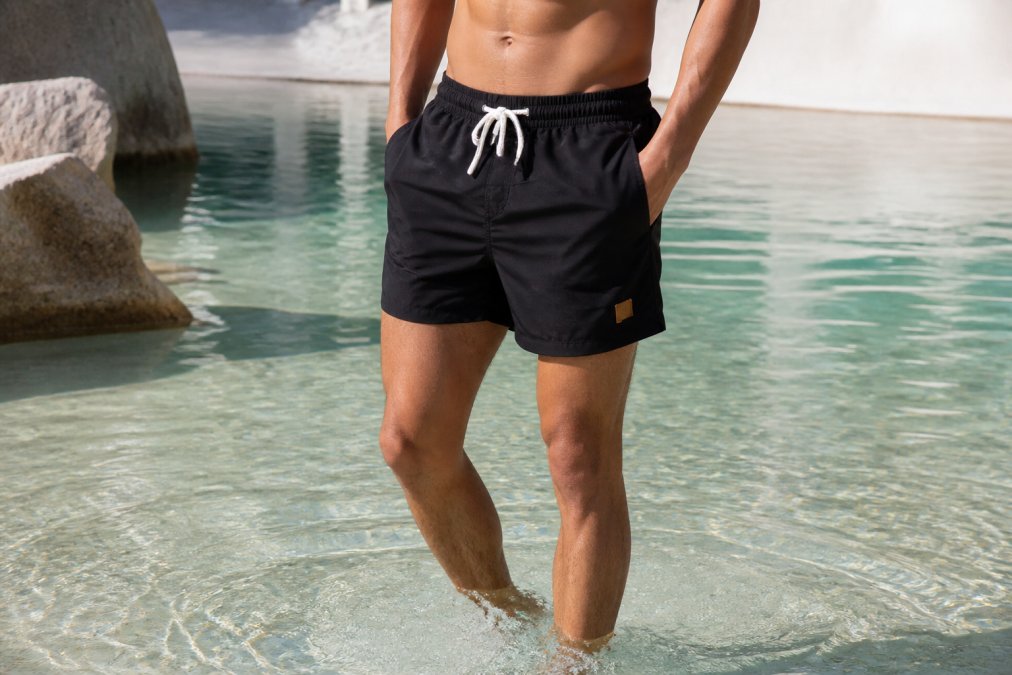
Available in multiple colours, black, summer blue, union beige, and green, these shorts work for swimmers who prioritise function over statement. The inseam length provides coverage without excess fabric that bunches in the water. Quick-dry properties mean they're wearable within 30 minutes of coming out of the pool, making them practical for back-to-back sessions or transitions to casual wear.
At $59-$59.95, the Block Swim Shorts sit at the mid-range price point. You're paying for reinforced construction and proven fade resistance, not premium branding. For swimmers who use their trunks 2-3 times per week, this style easily justifies the cost through durability alone.
The bundle option, buy 2 for $100, makes sense if you rotate between chlorinated pools and saltwater. Having a backup pair means you can rinse one thoroughly while wearing the other, which extends the life of both.
Not everyone wants solid colours. The Urban Classics Pattern Swim Shorts deliver durability with visual interest, stripes, prints, and designs that stand out without compromising construction quality.
The tattoo, bar stripe, and seahorse prints use the same polyester-nylon blend as the block shorts, so chlorine resistance and shape retention are identical. The difference is aesthetic. These trunks let you express preference while maintaining the same reinforced flatlock seams and quick-dry properties.
Pattern prints fade more visibly than solids under UV exposure, so if you spend hours in direct sunlight, expect colour shift over time. That said, the durable water repellent (DWR) finish on these shorts slows fading compared to untreated fabrics. Rinsing in fresh water immediately after each swim extends colour life significantly.
The bar stripe options (Baltic blue and pale pink) offer subtle pattern variation. The tattoo and seahorse prints are bolder, which appeals to swimmers who want their trunks to be noticeable. All patterns are printed using methods that bond to the fabric rather than sitting on top, reducing the risk of print cracking or peeling.

At the same $59 price point as the block shorts, pattern options represent excellent value if you want durability plus personality. The bundle pricing applies here too, buy 2 for $100.
The fabric choice is the foundation of durability. Most quality durable swimwear for men uses polyester, nylon, or a blend of both. Understanding the trade-offs helps you pick the right style for your specific use case.
Polyester resists chlorine better than any other common swimwear fabric. It doesn't absorb chemicals the way nylon does, which means less colour fading and less fibre degradation over time. Polyester also dries faster and maintains its shape through repeated stretching. The downside: pure polyester can feel stiff initially, though it softens after a few wears.
Nylon offers superior elasticity and a softer hand feel straight out of the package. It stretches more generously, which appeals to swimmers who want maximum freedom of movement. However, nylon absorbs chlorine more readily, leading to faster fading and fibre breakdown. Pure nylon trunks typically show visible wear within one season of regular use.
Polyester-nylon blends (typically 80% polyester, 20% nylon) represent the sweet spot. You get chlorine resistance from polyester and stretch recovery from nylon. The blend provides durability comparable to pure polyester while maintaining better comfort and flexibility than polyester alone.
Look for blends that lean toward polyester if durability is your priority. A 70/30 or 80/20 split favours longevity. Some budget brands use 50/50 blends, which compromise on both fronts, not quite the durability of polyester, not quite the comfort of nylon.
Chlorine is the primary enemy of swimwear longevity. It's a powerful oxidising agent that breaks down synthetic fibres, fades dyes, and weakens elastic components (peer-reviewed research). Chlorine-resistant swim trunks don't make chlorine harmless, nothing does, but they slow the damage significantly.
The Urban Classics swim shorts use fabric treatments that reduce chlorine absorption. The polyester base naturally resists chemical penetration better than nylon, but the finish applied to the fabric adds an extra barrier. This treatment isn't permanent, it degrades with washing, but it extends the effective life of your trunks by several months.
Rinsing in fresh water immediately after swimming is more important than the fabric's inherent chlorine resistance. When you leave chlorine on the fabric, it continues to oxidise the fibres even when you're not in the pool. A 30-second rinse removes most surface chlorine before it bonds to the material. This single habit extends trunks' life more than any fabric treatment alone.
Salt water presents a different challenge. Salt doesn't break down fabric the way chlorine does, but it corrodes seams and elastic components through crystallisation. Salt crystals form as water evaporates, and they create friction that weakens threads and elastic. Rinsing salt water off is just as critical as rinsing chlorine.
Many swimmers assume that chlorine-resistant fabrics mean they can skip rinsing. That's false economy. Even the most resistant fabric deteriorates faster if you leave chlorine on it. Treat chlorine resistance as a buffer that extends your trunks' life, not a substitute for proper care.
Proper care separates trunks that last one season from those that last three. The difference isn't complicated, but consistency matters.
Rinse immediately after swimming. Use fresh water, not the shower. Chlorine and salt need to be removed before they set into the fabric. A 30-second rinse under a tap is sufficient. You don't need soap or detergent at this stage, just water.
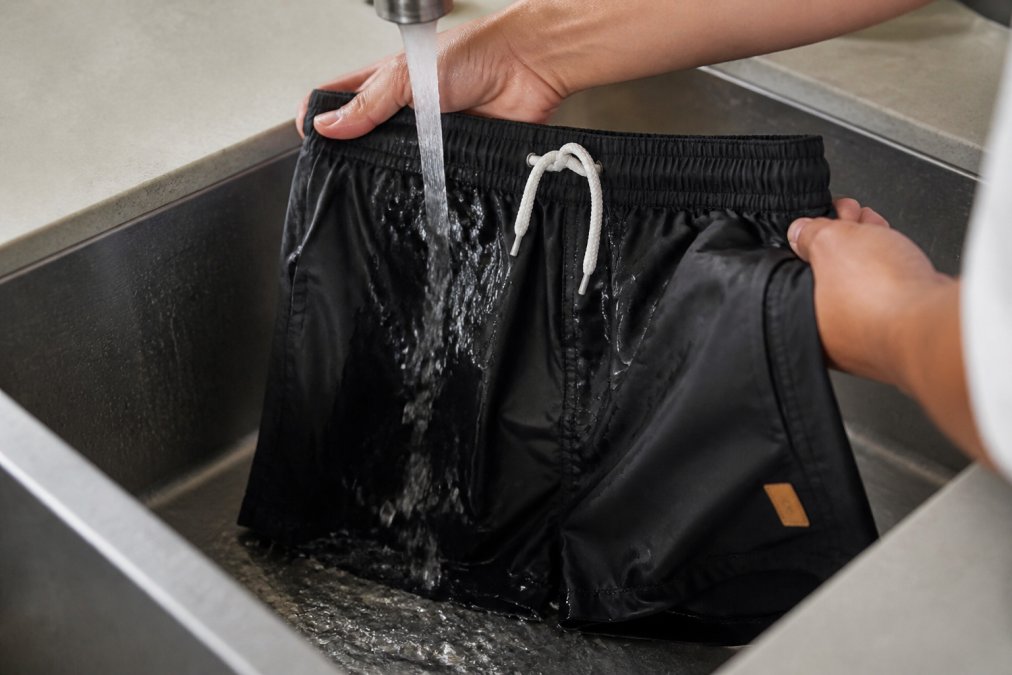
Wash separately, in cold water. When you wash your trunks at home, use cold water and mild detergent. Hot water speeds up fibre degradation and can set stains. Wash them with similar colours to prevent dye transfer. Avoid fabric softener, it leaves residue that traps chlorine and moisture.
Air dry only. Never use a tumble dryer. Heat damages elastic and accelerates fibre breakdown. Hang your trunks in a shaded area with good air circulation. Direct sunlight fades colours, so avoid line-drying in full sun if colour retention matters to you.
Rotate between pairs. If you swim regularly, owning two pairs lets you rinse one thoroughly while wearing the other. This spacing reduces the build-up of chlorine and salt, and it lets elastic recover between wears. The bundle pricing (2 for $100) makes this strategy affordable.
Store dry, in a cool place. Don't leave damp trunks in a gym bag or locker. Moisture and warmth create conditions for mildew and fibre degradation. Once dry, store them flat or hanging in a drawer away from direct heat.
Expect shape loss over time. Even with perfect care, elastic will eventually lose some recovery. After 50-80 wears (roughly 1-2 years of regular use), you'll notice the waistband sits slightly looser. This is normal and doesn't mean the trunks have failed, it means the elastic has reached the end of its functional life.
The choice between block and pattern styles comes down to personal preference, not durability. Both use identical fabric blends and seam construction. Block shorts appeal to swimmers who want understated basics. Pattern shorts work for those who want visual personality alongside durability.
For most swimmers, starting with one pair and rotating with a second makes sense. The bundle pricing (2 for $100) reduces the per-unit cost and lets you maintain the rinse-and-rotate cycle that extends trunks' life. This approach costs less over three years than buying cheap trunks annually.
If you swim in both chlorinated pools and saltwater, having two pairs is essential. Chlorine damage and salt corrosion happen at different rates and require different rinsing priorities. Alternating pairs lets you focus on thorough care for each without rushing.
Consider your typical swim frequency. If you swim 2-3 times per week, expect your trunks to last 1.5-2 years with proper care. If you're a casual swimmer (once monthly), a single pair could last 3-4 years. Heavy swimmers (5+ times per week) should plan for annual replacement and rotate multiple pairs.
The durable swimwear for men that works best is the pair you'll actually rinse and care for properly. Fabric quality and construction matter, but inconsistent care defeats even the best trunks. Urban Classics Block and Pattern Swim Shorts are built to last, but their longevity depends on your commitment to rinsing and storage habits.
Durability in swimwear isn't complicated, but it requires consistency. The Urban Classics Block and Pattern Swim Shorts deliver the fabric quality and seam construction that survive heavy use, but only if you rinse them immediately after swimming and store them properly. Start with the bundle option (2 for $100) to establish a rotation cycle, and you'll find your trunks outlasting cheaper alternatives by months or years. Shop now and build a swimwear wardrobe that actually lasts.
A: Durable swimwear uses higher-quality fabrics with superior tensile strength, reinforced seam construction, and fade-resistant treatments. These features prevent premature fraying, colour loss, and shape retention issues common in budget alternatives. Better materials also resist chlorine and saltwater damage, meaning your swim trunks maintain their fit and appearance through hundreds of washes and pool sessions.
A: Polyester blends with stretch offer excellent durability. Look for fabrics with durable water repellent (DWR) finishes. These materials resist chlorine degradation, dry quickly, and maintain shape retention through repeated use. Polyester blends also resist fading better than standard nylon, making them ideal for men who swim regularly or spend time in saltwater.
A: Chlorine resistant swim trunks feature specially treated fabrics that prevent the chemical from breaking down fibres and causing discolouration or weakening. The treatment creates a protective barrier on the material, reducing colour fade and extending fabric life significantly. This is especially important for frequent swimmers, as chlorine exposure degrades standard fabrics quickly, leading to thin, baggy swimwear within a few seasons.
A: High-quality durable swimwear can last for several years with proper care, even with regular use. Replace your swim trunks when you notice permanent shape loss, significant colour fading, fraying seams, or a thin, worn feel to the fabric. Swimmers who use their trunks 2-3 times weekly should inspect them every 12 months for early signs of wear. Proper maintenance, rinsing after use and air-drying, significantly extends this lifespan.
A: Prioritise reinforced seam construction, fade-resistant fabric treatments, and elastic waistbands with drawstring closures for durability. Check for quick-dry properties that prevent moisture damage. Brands offering bundle deals (like 2 for $100) allow you to rotate pairs, reducing wear on any single pair and extending the life of your entire collection significantly.
This article was written using GrandRanker
Your cart is currently empty.
Start Shopping