

How to Choose Quality Streetwear: A 2026 Buyer's Guide
Learn how to choose quality streetwear in 2026. Check GSM, fabric composition, stitching and hardware, then build a wardrobe that survives the wash. Start.
Learn how to choose quality streetwear in 2026. Check GSM, fabric composition, stitching and hardware, then build a wardrobe that survives the wash. Start.

Last Updated: September 17, 2026
Quality streetwear starts with the fabric, and the first number worth knowing is GSM. GSM stands for grams per square metre, and it measures how much a fabric weighs. A heavier fabric usually means a denser, longer-lasting garment.
At Urban Classics, we build our basics around heavyweight cotton because it holds its shape, hangs properly and survives regular wear.
GSM is a rough guide to density, not a guarantee of quality. A 240 GSM cotton tee will feel substantial and drape well. A 180 GSM tee will feel thin and cling in the wrong places.
Here is the range you will see most often:
Check the label or product page before you buy. If a brand hides the GSM, that tells you something.
French terry is a knit fabric with loops on one side and a smooth face on the other. It is the standard for quality hoodies because it breathes while staying warm.
Plain cotton jersey is lighter and better for tees. Cotton-polyester blends resist shrinking but can pill over time.
Pure heavyweight cotton is a strong choice for feel and durability. That is why we stick with it for our Heavy Oversized Tee.

Most guides stop at GSM. The next layer down is how the yarn was spun, and it changes everything about how a tee feels after ten washes.
Ring-spun cotton is drawn and twisted through rollers until the fibres align into a fine, tight yarn. The result is a smoother hand, less surface fuzz and a print surface that holds detail. It costs more to produce because the process is slower.
Open-end (rotor-spun) cotton is made by spinning fibres in a rotor rather than drawing them out. It is faster and cheaper, but the yarn is hairier and weaker. Open-end tees feel rougher against the skin and tend to pill at the underarm and hem within a season.
A practical test: rub the fabric between your thumb and forefinger.
Hoodies are where fabric construction matters most, and the two builds you will meet are loopback and three-end fleece.
Cotton-polyester blends are not automatically cheap. A small percentage of polyester can reduce shrinkage, improve recovery at the neckline and help a garment hold colour. That is why some performance-focused basics use them.
You can judge a garment in about thirty seconds once you know what to look for. Turn it inside out, check the seams, then check the hardware.
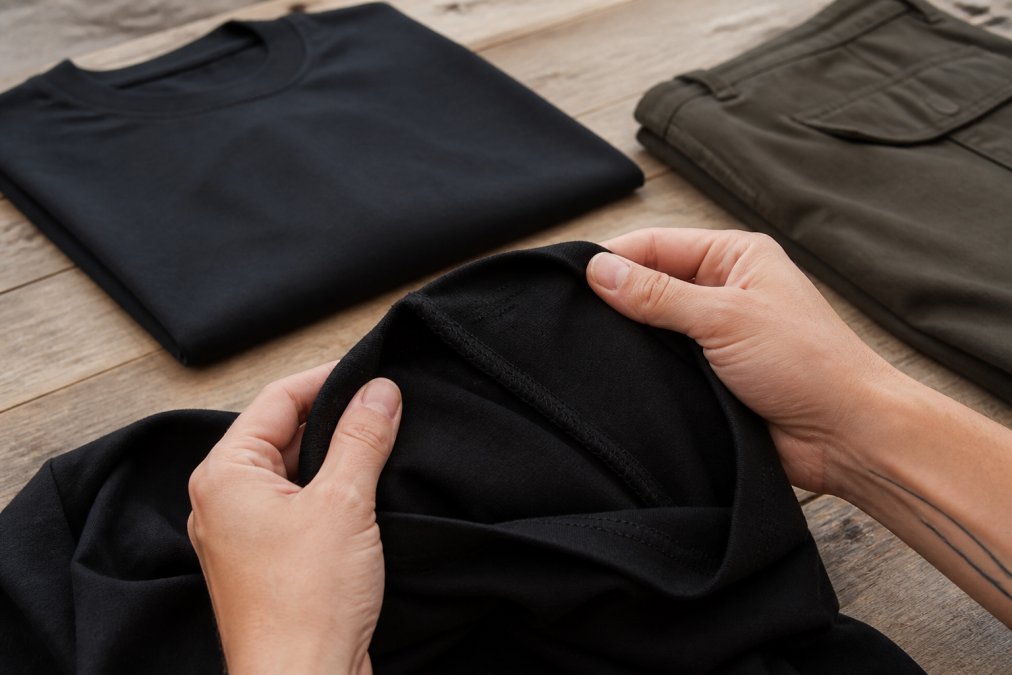
Good stitching is tight, even and consistent. Run your thumb along the inside seam. If the stitches are loose or uneven, the garment will unravel with wear.
Hardware fails before fabric does. A cheap zip jams within months. Metal zips from known makers glide for years.
Check these three things:
The wash test is a simple way to predict how a garment will age. Wash it once in cold water, then air dry it and compare it to a fresh one.
Here is how to run the test:
Fit is where online buying goes wrong most often. Every brand defines "oversized" differently, so read the actual measurements, not the size label.
This is the single most useful habit in online shopping, and almost no guide explains it properly. You are not measuring your body, you are measuring a garment that already fits you the way you want.
Drop shoulder is the measurement that trips people up most. On a standard tee, the shoulder seam sits at the edge of your shoulder. On a drop-shoulder tee, the seam sits further down the arm, which creates that relaxed, oversized silhouette.
Most size charts give you body measurements (chest, waist, height). Some give you garment measurements (the actual dimensions of the finished piece). These are not the same thing, and confusing them is the most common sizing error.
Measure a garment you already own and love, then compare those numbers to the size chart. This beats guessing every time.
Brands use the same words to mean different things. Here is a working translation:
Transparency is the clearest signal of a brand worth trusting. A brand that shows where its cotton comes from and who makes its clothes has nothing to hide.
A lasting wardrobe is built from a few heavy-hitting pieces, not twenty fast ones. Start with the basics that go with everything, then add character.
The core six:
Most people get this wrong in the same handful of ways. Here are the traps and how to dodge them.

| Mistake | Why It Hurts | The Fix |
|---|---|---|
| Chasing logos | You pay for hype, not fabric | Judge the garment, not the name |
| Ignoring GSM | Thin fabric fails fast | Check weight before you buy |
| Skipping the size chart | Wrong fit, wasted money | Compare measurements, not labels |
| Trusting the photo only | Studio shots hide flaws | Read fabric and construction details |
| Buying fast and often | Constant replacement | Buy fewer, heavier pieces |
Buying on drop-day hype without checking fabric weight is how people end up with a drawer of thin, shapeless tees. Read the specs first.
Building a wardrobe that actually lasts comes down to knowing what you are buying. Check the GSM, inspect the stitching and hardware, run the wash test, and read the fit profile before you commit.
Start with fabric weight and composition. Heavyweight cotton in the 220 to 300 GSM range holds its shape better than thin jersey, and French terry or loopback knits resist pilling. Check stitching integrity at the shoulders and hems, look for seam reinforcement at stress points, and test hardware like zips before committing. A garment that passes the wash test, keeping its size and colour after two or three cycles, is a safer long-term buy than one that only looks good on the rack.
No. Price reflects brand positioning, drop culture scarcity and marketing spend as much as textile quality. A $49 heavyweight tee can outperform a $150 graphic tee if the fabric composition and garment construction are stronger. Judge quality streetwear on measurable signals: GSM, fabric composition, stitching integrity, hardware quality and how the piece holds up after washing. Price-to-quality ratio matters more than the number on the tag, especially for basics you'll wear weekly.
Heavyweight cotton, French terry and cotton-poly blends cover most needs. Heavyweight cotton gives structure and takes screen printing and embroidery well. French terry is warmer and smoother, which suits hoodies and joggers. A small polyester or elastane percentage can improve shape retention and reduce shrinkage, though it changes the hand feel. Avoid very thin single-jersey knits if you want a garment that survives regular washing without going baggy or transparent.
Buy fewer, heavier pieces and rotate them. Start with two or three heavyweight tees in neutral colours, one hoody, and one pair of cargo pants or joggers with reinforced seams. Wash cold, inside out, and air dry where possible to protect colourfastness and minimise shrinkage. Add statement pieces only after your basics hold up over a season. A wardrobe built on durable basics can be a smart investment.
Your cart is currently empty.
Start Shopping